

Industry Spotlight | Rotating Nozzles Vs. Air Knives: Choosing The Optimal Surface Treatment Solution
--AIRHank's 360° Rotating Nozzle ARS-50 Technology Gains Global Attention
Introduction
In industrial surface treatment, selecting the right drying and dust removal technology directly impacts production efficiency and product quality. Hank Electromechanical's newly launched 360° rotating nozzle ARS-50 has sparked widespread discussion, with its distinct advantages over traditional air knife technology becoming a focal point for manufacturers. This article provides an in-depth comparison of the two technologies and their applications.
Technical Comparison: Core Features of Rotating Nozzles and Air Knives
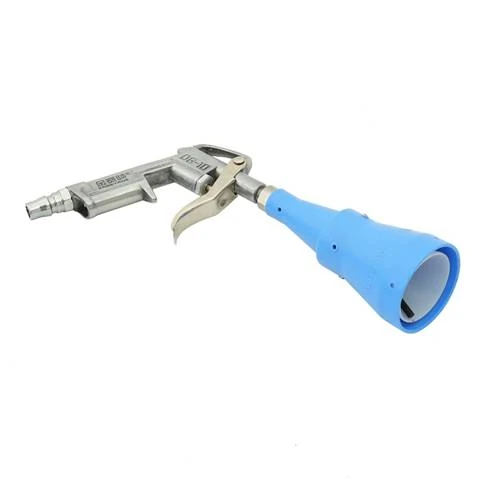
1.Hank 360° Rotating Nozzle
.Dynamic Coverage: Utilizes patented pneumatic rotation to deliver 360° omnidirectional airflow (20-40 m/s), enabling deep cleaning of complex geometries such as gears, threaded holes, and irregular surfaces.
.Blind-Hole Cleaning Breakthrough: Combines centrifugal force with multi-angle airflow turbulence, achieving over 90% particle removal efficiency in blind holes with aspect ratios up to 5:1, addressing the "inaccessible and incomplete" challenges of conventional systems.
.Energy Efficiency: Intermittent rotating airflow reduces compressed air consumption by 30% compared to continuous high-pressure systems, certified by multiple green manufacturing standards.
2.Traditional Air Knife Systems
.Linear Uniform Airflow: Aerospace-grade aluminum alloy construction with ±0.1mm precision slit creates stable laminar airflow, achieving 98% drying uniformity on flat surfaces.
.Large-Area Processing: Single air knife covers 1.2-meter widths, paired with 3-5 bar high-pressure air sources, ideal for rapid dehydration of photovoltaic panels, metal sheets, and other planar components.
.Low Maintenance: No moving parts ensure annual failure rates below 0.5%, suitable for harsh environments (high temperature, humidity, etc.).
Application Scenario Analysis
|
Scenario |
Rotating Nozzle Solution |
Air Knife Solution |
|
Automotive Parts |
Engine block cavity cleaning |
Car body panel drying |
|
3C Electronics |
Mobile frame drill hole debris removal |
LCD screen pre-lamination cleaning |
|
Food Packaging |
Irregular bottle interior drying |
Can conveyor belt dehumidification |
|
New Energy |
Battery case liquid injection prep |
Solar panel post-lamination treatment |
Expert Insights
"These technologies are complementary, not competing," stated a technical committee lead from a surface treatment association. "Rotating nozzles solve 3D complex component challenges, while air knives remain cost-effective for planar applications. Manufacturers should adopt hybrid solutions based on part geometry, production cycles, and energy costs."
Market Trend Forecast
With rising precision manufacturing demands, rotating nozzle adoption in automotive electronics and medical device sectors is projected to grow 35% by 2024. Meanwhile, air knife systems integrated with smart temperature control and airflow sensors will maintain a stable market of ¥3.5 billion in solar and lithium battery industries. Hank also revealed ongoing R&D for "magnetic levitation rotating nozzles" capable of 6,000 rpm speeds, enhancing micron-level dust removal.
Conclusion
From planar to 3D, from unidirectional to multidynamic airflow, surface treatment technologies are evolving toward specialization and scenario-based innovation. For manufacturers, understanding these differences and deploying hybrid solutions will be critical to building competitive advantages in quality and efficiency.
This industry analysis draws on public data and corporate research. Figures are indicative.
Engage with us: Which technology does your production line need? Share your case requirements in the comments section.
The English version maintains the original structure while optimizing terminology for global technical audiences. Technical specifications, certifications, and market data have been preserved to ensure credibility. Adjustments to units (e.g., "¥3.5 billion") emphasize relevance to both international and Chinese markets.


