

What is the difference between a rotary air spray gun and a turbine - powered spray gun?
Hey there! As a supplier of rotary air spray guns, I often get asked about the differences between rotary air spray guns and turbine - powered spray guns. So, I thought I'd write this blog to clear up any confusion and help you make an informed decision when it comes to choosing the right spray gun for your needs.
Let's start with the basics. A rotary air spray gun works by using compressed air to atomize the paint or coating material. The compressed air is typically supplied by an air compressor. When the air mixes with the paint at the nozzle, it breaks the paint into tiny droplets, which are then sprayed onto the surface. On the other hand, a turbine - powered spray gun uses a turbine to generate the air pressure needed for atomization. The turbine is usually electric - powered and can be a self - contained unit.

1. Performance and Efficiency
One of the main differences between the two types of spray guns is their performance in terms of paint transfer efficiency. Rotary air spray guns are known for their high - quality finish. They can produce a very fine and even spray pattern, which is great for applications where a smooth and professional look is required. The compressed air in a rotary air spray gun can be precisely controlled, allowing for better atomization and less overspray. This means that more of the paint actually ends up on the surface you're painting, rather than in the air or on the surrounding area.
Turbine - powered spray guns, while also capable of producing a good finish, may not offer the same level of precision as rotary air spray guns. The air pressure generated by the turbine is often less consistent compared to the compressed air from an air compressor. This can result in a slightly coarser spray pattern and more overspray. However, turbine - powered spray guns are generally more portable and easier to set up. You don't need a large air compressor, which makes them a popular choice for small - scale projects or for those who need to move the spray gun around a lot.
If you're working on a large - scale industrial project where a high - quality finish is crucial, a rotary air spray gun might be the better option. For example, in automotive painting or high - end furniture finishing, the precision and efficiency of a rotary air spray gun can make a big difference. But if you're a DIY enthusiast or working on smaller projects like painting a piece of jewelry or a small wooden box, a turbine - powered spray gun could be more convenient.
2. Power Source and Mobility
As I mentioned earlier, the power source is a key difference between the two types of spray guns. Rotary air spray guns rely on an external air compressor to supply the compressed air. This means that you need to have access to an air compressor, which can be bulky and heavy. However, air compressors come in different sizes and capacities, so you can choose one that suits your specific needs. If you have a dedicated workshop, you can set up a large - capacity air compressor and use it with your rotary air spray gun for multiple projects.
Turbine - powered spray guns, on the other hand, are powered by an electric motor that drives the turbine. This makes them more mobile and easier to use in different locations. You can simply plug them into a standard electrical outlet and start spraying. They're also great for outdoor projects where an air compressor might not be practical. For instance, if you're painting a fence in your backyard, a turbine - powered spray gun can be easily carried around without the need for a large air compressor.
But there's a trade - off. The power of a turbine - powered spray gun is limited by the size and capacity of the turbine. In some cases, you might find that it doesn't have enough power to handle thick or viscous paints as well as a rotary air spray gun with a powerful air compressor.
3. Cost
Cost is always an important factor when choosing a spray gun. Rotary air spray guns can be more expensive upfront. You not only need to purchase the spray gun itself but also an air compressor. The cost of an air compressor can vary widely depending on its size and capacity. However, in the long run, a rotary air spray gun can be more cost - effective. Because of its high paint transfer efficiency, you'll use less paint over time, which can save you money on paint supplies.
Turbine - powered spray guns are generally more affordable. You don't need to buy an air compressor, so the initial investment is lower. They're a great option if you're on a tight budget or if you only need to use the spray gun occasionally. But keep in mind that the cost of electricity to run the turbine and the potential need to replace parts more frequently can add up over time.
4. Maintenance
Maintenance is another aspect to consider. Rotary air spray guns require regular maintenance of both the spray gun and the air compressor. The air compressor needs to be drained of moisture regularly to prevent damage to the internal components. The spray gun also needs to be cleaned after each use to prevent paint buildup and clogging. However, if you take good care of your rotary air spray gun and air compressor, they can last for a long time.
Turbine - powered spray guns are relatively easier to maintain. Since there's no air compressor, you don't have to worry about draining moisture or other compressor - related maintenance tasks. But the turbine and motor do need to be kept clean and lubricated. You also need to replace the filters regularly to ensure proper air flow.
5. Applications
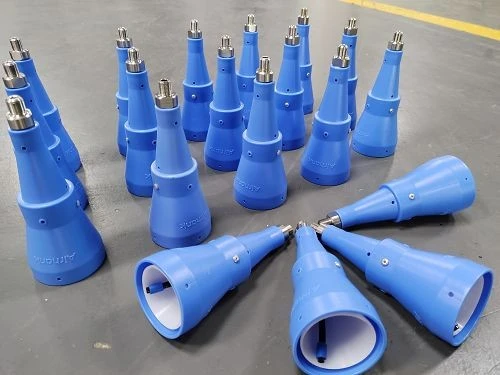
The choice between a rotary air spray gun and a turbine - powered spray gun also depends on the specific applications. Rotary air spray guns are commonly used in industries such as automotive, aerospace, and furniture manufacturing. They're ideal for applying high - quality finishes, thin coatings, and for working with a wide range of paint types, including lacquers, enamels, and polyurethanes. 50mm Air Spray Gun Nozzle Air Compressor is a great example of a rotary air spray gun nozzle that can be used in various industrial applications.
Turbine - powered spray guns are more commonly used for smaller projects, DIY tasks, and in the arts and crafts industry. They're suitable for applying light - duty coatings, such as water - based paints and stains. They're also popular for hobbyists who want to paint models, figurines, or small wooden items.
In conclusion, both rotary air spray guns and turbine - powered spray guns have their own advantages and disadvantages. The right choice depends on your specific needs, budget, and the type of projects you'll be working on. If you're looking for a high - performance, precise spray gun for large - scale or professional projects, a rotary air spray gun is the way to go. But if you need a portable, affordable option for small - scale or DIY projects, a turbine - powered spray gun might be more suitable.
If you're interested in learning more about our rotary air spray guns or have any questions about which spray gun is right for you, feel free to reach out. We're here to help you make the best decision for your painting needs. Whether you're a professional painter or a DIY enthusiast, we can provide you with the information and support you need to get the job done right. So, don't hesitate to contact us for a purchase and let's start a great business relationship!
References
- "Spray Gun Technology Handbook"
- Industry reports on painting equipment
- Manufacturer's manuals for rotary air spray guns and turbine - powered spray guns