

What is the difference between a manual and an automatic rotary air spray gun?
As a supplier of rotary air spray guns, I've encountered numerous inquiries regarding the differences between manual and automatic rotary air spray guns. This blog post aims to delve into these disparities, providing you with a comprehensive understanding to help you make an informed decision for your specific needs.
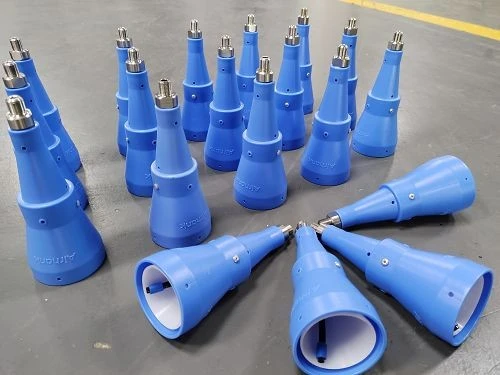

Working Principle
The fundamental difference between manual and automatic rotary air spray guns lies in their operation mechanisms. A manual rotary air spray gun is handheld and controlled by an operator. The user has direct control over the movement, speed, and direction of the spray. This hands - on approach allows for a high degree of flexibility, especially when dealing with complex shapes or small - scale projects. For instance, in art restoration or small - batch custom painting, the operator can precisely adjust the spray pattern according to the contours of the object.
On the other hand, an automatic rotary air spray gun is integrated into a mechanical system. It is typically programmed to follow a pre - determined path and perform repetitive spraying tasks. These guns are often used in large - scale industrial production lines, such as automotive manufacturing or furniture finishing. The automatic system ensures consistent and uniform spraying, reducing human error and increasing productivity.
Spray Efficiency
In terms of spray efficiency, automatic rotary air spray guns have a clear advantage. They can operate continuously without breaks, maintaining a constant spraying speed and pattern. This results in a higher output rate compared to manual guns. For example, in a mass - production factory, an automatic gun can spray hundreds of parts per hour, while a manual gun may only be able to handle a fraction of that number.
Manual guns, however, offer better control in certain situations. When dealing with irregularly shaped objects or areas that require detailed work, an operator can slow down or speed up the spraying process as needed. This adaptability can sometimes lead to a more precise finish, even if it takes longer.
Precision and Consistency
Automatic rotary air spray guns are renowned for their precision and consistency. Since they are programmed to follow a specific pattern, the spray thickness and coverage are highly uniform across all sprayed surfaces. This is crucial in industries where quality control is of utmost importance, such as the aerospace industry, where even a slight variation in coating thickness can affect the performance of the components.
Manual guns rely on the skill and experience of the operator. While a highly skilled painter can achieve excellent results, there is always a risk of human error. Fatigue, distractions, or inconsistent hand movements can lead to variations in the spray pattern, resulting in uneven coating thickness or missed spots.
Cost Considerations
The cost of purchasing and operating manual and automatic rotary air spray guns varies significantly. Manual guns are generally more affordable upfront. They have a simpler design and do not require complex programming or integration with a production line. Additionally, the maintenance cost of manual guns is relatively low, as they have fewer components that can malfunction.
Automatic guns, on the other hand, are more expensive to purchase. They are equipped with advanced technology and often require professional installation and programming. The operating cost also includes the energy consumption of the mechanical system and the cost of software updates. However, in the long run, the increased productivity and reduced waste of automatic guns can offset the initial investment, especially for large - scale operations.
Application Flexibility
Manual rotary air spray guns are extremely versatile. They can be used in a wide range of applications, from small - scale DIY projects to large - scale industrial touch - ups. They can easily adapt to different working environments and can be used in areas where access is limited.
Automatic guns are more specialized. They are designed for specific production processes and are most effective when used in a controlled industrial setting. While they can be reprogrammed for different tasks, the process can be time - consuming and may require technical expertise.
Safety
Safety is an important factor to consider when choosing between manual and automatic rotary air spray guns. Manual guns require the operator to be in close proximity to the spraying area, which exposes them to the risk of inhaling paint fumes and overspray. Proper personal protective equipment (PPE), such as respirators and goggles, must be worn at all times.
Automatic guns are generally safer in this regard. Since they are operated remotely, the operator can be located in a separate area, away from the hazardous fumes. However, the mechanical system of automatic guns also poses its own safety risks, such as moving parts that can cause injuries if not properly maintained or guarded.
Which One is Right for You?
If you are a small - business owner, an artist, or a DIY enthusiast, a manual rotary air spray gun may be the best choice for you. It offers the flexibility and control you need for small - scale projects, and the lower cost makes it a more affordable option. You can check out our 50mm Air Spray Gun Nozzle Air Compressor for a reliable and cost - effective manual spraying solution.
For large - scale industrial manufacturers, an automatic rotary air spray gun is likely to be the better option. The increased productivity, precision, and consistency can significantly improve the quality of your products and reduce production costs in the long run.
In conclusion, both manual and automatic rotary air spray guns have their own unique advantages and disadvantages. By understanding the differences between them, you can make an informed decision that best suits your specific needs. If you have any further questions or are interested in purchasing a rotary air spray gun, please feel free to contact us for a detailed consultation. We are committed to providing you with the best products and services to meet your spraying requirements.
References
- Industrial Coating Technology Handbook
- Spray Gun Manuals and Technical Documents