

What are the surface smoothness requirements for an aluminum alloy air knife air blade?
Surface smoothness is a critical factor in the performance and functionality of an aluminum alloy air knife air blade. As a leading supplier of Aluminum Alloy Air Knife Air Blade, we understand the importance of meeting the highest surface smoothness requirements to ensure optimal performance in various industrial applications.
Understanding Surface Smoothness
Surface smoothness refers to the texture and finish of the surface of an object. In the context of an aluminum alloy air knife air blade, it is the measure of how flat, even, and free of imperfections the surface is. A smooth surface is essential for several reasons:
- Airflow Efficiency: A smooth surface reduces air resistance, allowing for a more efficient and uniform airflow. This is crucial for applications where precise control of airflow is required, such as in drying, cleaning, or coating processes.
- Particle Removal: In applications where the air knife is used to remove particles or debris from a surface, a smooth surface helps prevent particles from adhering to the air blade, ensuring effective cleaning.
- Corrosion Resistance: A smooth surface is less prone to corrosion, as it provides fewer areas for moisture and contaminants to accumulate. This is particularly important in environments where the air knife is exposed to harsh chemicals or high humidity.
- Aesthetic Appeal: In some applications, the appearance of the air knife may be important. A smooth surface gives the air blade a professional and high-quality look.
Surface Smoothness Requirements for Aluminum Alloy Air Knife Air Blades
The surface smoothness requirements for an aluminum alloy air knife air blade depend on several factors, including the specific application, the type of airflow required, and the operating environment. Here are some general guidelines:
- Ra Value: The Ra value is a commonly used measure of surface roughness. It represents the arithmetic average of the absolute values of the surface profile deviations from the mean line. For most industrial applications, an Ra value of 0.8 to 3.2 micrometers is considered acceptable. However, for applications that require a very precise and uniform airflow, such as in semiconductor manufacturing, an Ra value of less than 0.8 micrometers may be required.
- Surface Finish: The surface finish of the air blade can also affect its performance. A mirror finish or a polished surface is often preferred for applications where a high degree of smoothness is required. This type of finish not only reduces air resistance but also makes the air blade easier to clean and maintain.
- Edge Quality: The edges of the air blade should be smooth and free of burrs or sharp edges. This helps prevent turbulence and ensures a consistent airflow. Additionally, smooth edges reduce the risk of injury to operators who may come into contact with the air knife.
Manufacturing Processes for Achieving High Surface Smoothness
To achieve the required surface smoothness for an aluminum alloy air knife air blade, several manufacturing processes can be employed:
- Machining: Precision machining techniques, such as milling, turning, and grinding, can be used to create a smooth surface on the air blade. These processes allow for tight tolerances and can produce a surface finish with an Ra value of less than 0.8 micrometers.
- Polishing: Polishing is a finishing process that involves using abrasive materials to remove small amounts of material from the surface of the air blade, resulting in a smooth and shiny finish. Polishing can be done manually or using automated equipment, depending on the size and complexity of the air blade.
- Anodizing: Anodizing is an electrochemical process that creates a protective oxide layer on the surface of the aluminum alloy. This layer not only provides corrosion resistance but also improves the surface smoothness and hardness of the air blade. Anodizing can be used in combination with other finishing processes to achieve the desired surface characteristics.
Importance of Quality Control
Ensuring that the air knife air blade meets the required surface smoothness standards is essential for its performance and reliability. At our company, we have a rigorous quality control process in place to ensure that every air blade we produce meets the highest standards of quality. Here are some of the steps we take:
- Inspection: We use advanced inspection equipment, such as profilometers and optical microscopes, to measure the surface roughness and finish of the air blades. This allows us to detect any deviations from the required specifications and take corrective action if necessary.
- Testing: We conduct extensive testing on our air knives to ensure that they meet the performance requirements of our customers. This includes testing the airflow characteristics, pressure distribution, and particle removal efficiency of the air blades.
- Documentation: We maintain detailed documentation of the manufacturing process and quality control results for each air blade we produce. This documentation provides traceability and ensures that our products meet the highest standards of quality and reliability.
Applications of Aluminum Alloy Air Knife Air Blades
Aluminum alloy air knife air blades are used in a wide range of industrial applications, including:
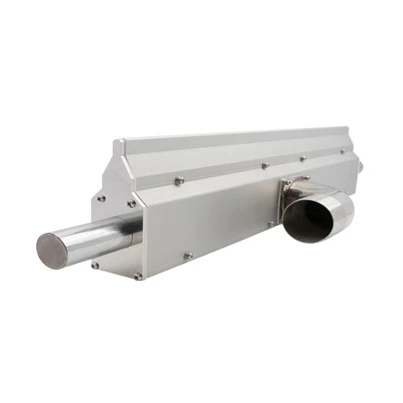
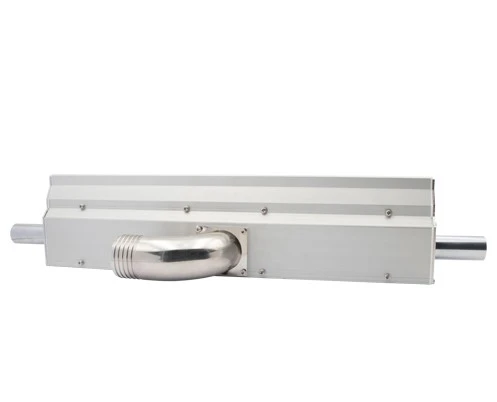
- Drying: In the food and beverage industry, air knives are used to dry products such as bottles, cans, and packages after washing or filling. The smooth surface of the air blade ensures efficient drying and prevents water spots from forming on the products.
- Cleaning: In the automotive and electronics industries, air knives are used to clean parts and components before assembly. The high-velocity airflow generated by the air knife helps remove dust, debris, and other contaminants from the surface of the parts.
- Coating: In the painting and coating industry, air knives are used to apply a uniform layer of paint or coating to a surface. The smooth surface of the air blade helps ensure a consistent and even application of the coating.
- Cooling: In the metalworking and plastics industries, air knives are used to cool hot parts and products. The high-velocity airflow helps dissipate heat quickly, reducing the cooling time and improving the productivity of the manufacturing process.
Conclusion
Surface smoothness is a critical factor in the performance and functionality of an aluminum alloy air knife air blade. By understanding the surface smoothness requirements and employing the appropriate manufacturing processes and quality control measures, we can ensure that our air blades meet the highest standards of quality and reliability. If you are in need of a high-quality aluminum alloy air knife air blade for your industrial application, please contact us. We would be happy to discuss your specific requirements and provide you with a customized solution.
References
- ASME B46.1 - Surface Texture (Surface Roughness, Waviness, and Lay)
- ISO 4287 - Geometrical Product Specifications (GPS) - Surface texture: Profile method - Terms, definitions and surface texture parameters
- ASTM D2486 - Standard Classification for Surface Roughness, Waviness, and Lay