

How to increase the spraying range of a rotary air spray gun?
Hey there! I'm an industry insider and a provider of rotary air spray guns. Today, I wanna chat about how to increase the spraying range of a rotary air spray gun. This is something I've been dealing with a lot in my work, and I'm eager to share some insights with y'all.
First off, let's understand why increasing the spraying range is so important. In many industrial and commercial applications, a wider spraying range means you can cover more area in less time. This not only boosts efficiency but also cuts down on labor costs. Whether you're painting a large wall, coating a big machine part, or applying pesticides in a large field, a longer spraying range can make your job a whole lot easier.
One of the key factors that affects the spraying range is the air pressure. You see, the higher the air pressure, the farther the spray can travel. Most rotary air spray guns come with adjustable air pressure settings. You can usually find a pressure regulator on the gun itself. Cranking up the air pressure can give the paint or liquid inside the gun a stronger push, sending it out further. But here's the catch: you can't just go crazy with it. Too much air pressure can cause problems like over - spraying, where the material gets wasted and creates a messy working environment. Also, it might damage the gun in the long run. So, you gotta find that sweet spot. You may need to do some testing with different pressure levels on a scrap surface to see what works best for your specific application.
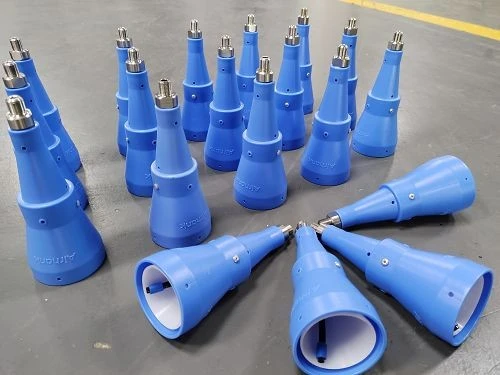
Another thing that plays a big role is the nozzle. The nozzle is like the mouth of the spray gun. A well - designed nozzle can significantly increase the spraying range. When you choose a nozzle, look for one with a larger orifice size. A bigger orifice allows more material to flow out at once, and with the right air pressure, this can extend the reach of the spray. For example, our 50mm Air Spray Gun Nozzle Air Compressor is a great option. It's specifically engineered to optimize the flow of the material and provide a wider spraying range. This nozzle works in harmony with the air - induced force from the gun to send the spray farther.
The type of material you're spraying also matters. Different materials have different viscosities. Viscosity is basically how thick or thin a liquid is. Materials with lower viscosity, like water - based paints or certain solvents, are easier to spray and can travel farther. If you're using a thick material, you might want to thin it down a bit. Of course, you need to make sure you're following the manufacturer's guidelines when thinning the material. Thinning it too much can affect the quality of the finish, but if done right, it can improve the spraying range.
Proper maintenance of the spray gun is crucial as well. If the gun is dirty or clogged, it won't work efficiently, and the spraying range will be limited. Regularly clean the gun after each use. Take apart the gun carefully and clean all the components, especially the nozzle and the air passage. Use the appropriate cleaning solvents recommended by the gun manufacturer. Also, lubricate the moving parts to ensure smooth operation. A well - maintained gun will perform better and can achieve a greater spraying range consistently.
The distance between the gun and the target surface is another variable. You might think that the closer you are, the more effective the spray. But that's not always the case. If you're too close, the material may build up in one spot and not cover a wide enough area. On the other hand, if you're too far away, the spray may lose its force and not reach the surface evenly. Experiment with different distances to find the optimal one for your task. A general rule of thumb is to start at around 8 - 12 inches and adjust from there based on the results.
Now, let's talk about the spraying technique. How you hold and move the gun can have a significant impact on the spraying range. Hold the gun firmly but not too tightly. A tight grip can make it harder to control the gun movement. Move the gun in a smooth, steady motion across the surface. Avoid jerky or uneven movements, as these can disrupt the flow of the spray and reduce the range. Some people find it helpful to use a guide or a pattern to keep their movements consistent.
When it comes to the air compressor, make sure it's up to the task. A low - power air compressor won't be able to provide enough air pressure to get a long - distance spray. Check the specifications of your spray gun to find out the required air flow and pressure, and choose an air compressor that can meet those needs. If your current air compressor isn't powerful enough, upgrading it could be a good investment to increase the spraying range.
In addition to the mechanical and technical aspects, consider the environmental factors. Wind can have a major influence on the spraying range. If it's windy, the spray may be blown off course, reducing the effective range. Try to work in a sheltered area or choose a calm day if possible. Temperature can also affect the material and the performance of the gun. Extreme temperatures can thicken or thin the material unexpectedly, so it's important to pay attention to the working conditions.
To sum it up, increasing the spraying range of a rotary air spray gun involves a combination of factors. You need to optimize the air pressure, choose the right nozzle, consider the material's viscosity, maintain the gun properly, use the correct spraying technique, have a suitable air compressor, and take environmental factors into account.

If you're in the market for a rotary air spray gun or need advice on how to improve the performance of your current one, don't hesitate to reach out. We're here to help you get the most out of your spraying operations. You can contact us to start a discussion about your specific needs and how we can assist you in achieving a greater spraying range for all your projects.
References
- Some general knowledge from my years of experience in the rotary air spray gun industry.
- Technical manuals provided by spray gun manufacturers.