

What is the working principle of a high speed centrifugal blower?
A high-speed centrifugal blower is a crucial piece of equipment in various industrial and commercial applications, known for its ability to generate high airflow and pressure efficiently. As a supplier of high-speed centrifugal blowers, I am often asked about the working principle behind these powerful machines. In this blog post, I will delve into the details of how a high-speed centrifugal blower operates, its key components, and the benefits it offers.
Basic Working Principle
The fundamental principle of a high-speed centrifugal blower is based on the conversion of kinetic energy into potential energy. When the blower is in operation, the impeller rotates at a high speed, typically driven by an electric motor or a turbine. As the impeller spins, it draws in air from the inlet and accelerates it radially outward. This acceleration creates a high-velocity airflow, which is then directed towards the diffuser.
The diffuser is a stationary component that surrounds the impeller. Its main function is to slow down the high-velocity airflow and convert the kinetic energy into pressure energy. As the airflow passes through the diffuser, its velocity decreases, and the pressure increases. The pressurized air is then discharged through the outlet of the blower, where it can be used for various applications such as ventilation, cooling, drying, and pneumatic conveying.
Key Components
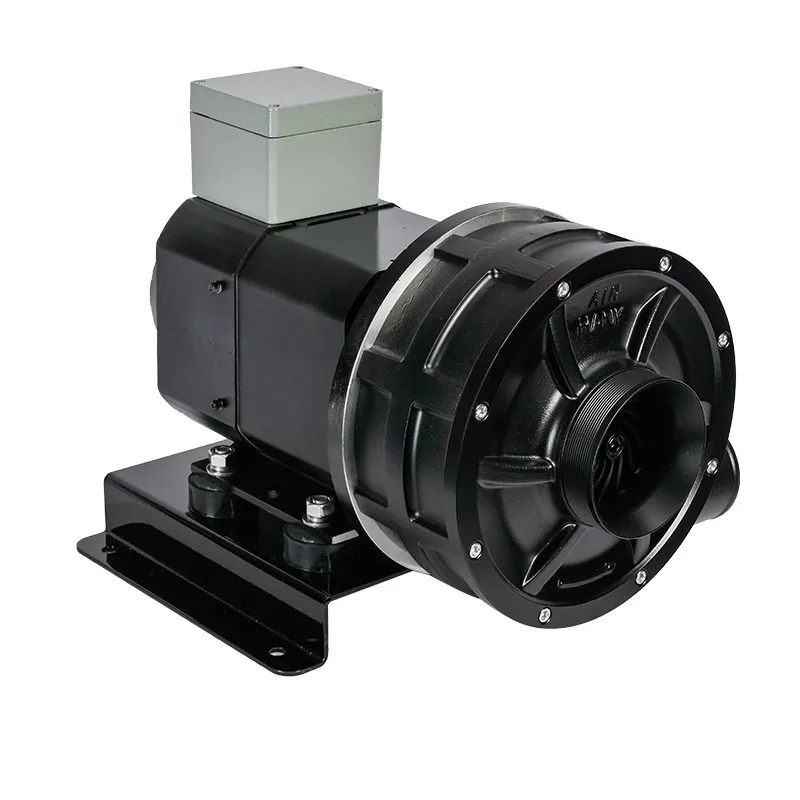
A high-speed centrifugal blower consists of several key components, each playing a vital role in its operation. These components include:
- Impeller: The impeller is the heart of the blower. It is a rotating component with curved blades that are designed to accelerate the airflow. The shape and design of the impeller blades determine the performance characteristics of the blower, such as the airflow rate, pressure, and efficiency.
- Casing: The casing is a stationary component that encloses the impeller and the diffuser. It provides a housing for the blower and directs the airflow through the impeller and the diffuser. The casing is typically made of cast iron, steel, or aluminum, depending on the application and the operating conditions.
- Diffuser: The diffuser is a stationary component that surrounds the impeller. It is designed to slow down the high-velocity airflow and convert the kinetic energy into pressure energy. The diffuser can be either a vaned or a vaneless type, depending on the application and the performance requirements.
- Motor or Turbine: The motor or turbine is the power source of the blower. It provides the rotational energy to drive the impeller. The motor can be either an electric motor or a combustion engine, depending on the application and the availability of power.
- Inlet and Outlet: The inlet and outlet are the openings through which the air enters and exits the blower. The inlet is typically equipped with a filter to remove any dust or debris from the incoming air, while the outlet is connected to the ductwork or the equipment that requires the pressurized air.
Benefits of High-Speed Centrifugal Blowers
High-speed centrifugal blowers offer several benefits over other types of blowers, including:

- High Efficiency: High-speed centrifugal blowers are designed to operate at high speeds, which allows them to generate high airflow and pressure with relatively low power consumption. This makes them more energy-efficient than other types of blowers, such as positive displacement blowers.
- Compact Design: High-speed centrifugal blowers have a compact design, which makes them suitable for applications where space is limited. They can be easily installed in small spaces, such as rooftops, basements, and equipment rooms.
- Low Noise and Vibration: High-speed centrifugal blowers are designed to operate quietly and smoothly, with low noise and vibration levels. This makes them suitable for applications where noise and vibration are a concern, such as hospitals, schools, and residential areas.
- Wide Range of Applications: High-speed centrifugal blowers can be used for a wide range of applications, including ventilation, cooling, drying, and pneumatic conveying. They are commonly used in industries such as HVAC, food processing, pharmaceuticals, and chemical processing.
Applications of High-Speed Centrifugal Blowers
High-speed centrifugal blowers are used in a wide range of applications, including:
- HVAC Systems: High-speed centrifugal blowers are commonly used in HVAC systems to provide ventilation and air circulation. They can be used to supply fresh air to buildings, remove stale air, and maintain a comfortable indoor environment.
- Industrial Processes: High-speed centrifugal blowers are used in various industrial processes, such as drying, cooling, and pneumatic conveying. They can be used to dry products, cool equipment, and transport materials from one location to another.
- Power Generation: High-speed centrifugal blowers are used in power generation plants to provide combustion air to boilers and turbines. They can be used to increase the efficiency of power generation and reduce emissions.
- Water Treatment: High-speed centrifugal blowers are used in water treatment plants to provide aeration to wastewater. They can be used to increase the oxygen content of the wastewater and promote the growth of beneficial bacteria, which helps to break down organic matter and remove pollutants.
Our High-Speed Centrifugal Blower Products
As a supplier of high-speed centrifugal blowers, we offer a wide range of products to meet the needs of our customers. Our products include the High-speed Energy-saving Blower for PV Equipment DPT-200, the AIIHANK High-Speed Turbine Three-Dimensional Flow Blower DPT-100, and the Drying Blower for Ultrasonic Cleaner DPT-150. These products are designed to provide high performance, energy efficiency, and reliability, and are suitable for a wide range of applications.
Contact Us for Procurement and洽谈
If you are interested in our high-speed centrifugal blower products or have any questions about their working principle, applications, or performance, please do not hesitate to contact us. Our team of experts is always ready to assist you and provide you with the information and support you need. We look forward to working with you and helping you find the right high-speed centrifugal blower solution for your needs.
References
- Fluid Mechanics and Machinery by R.K. Bansal
- HVAC Systems Design Handbook by Ashrae
- Industrial Ventilation: A Manual of Recommended Practice by American Conference of Governmental Industrial Hygienists