

What is the impact of air flow direction on the performance of a ta super pneumatic air knife?
Air flow direction plays a crucial role in the performance of a TA super pneumatic air knife. As a supplier of TA super pneumatic air knives, I have witnessed firsthand how the orientation and movement of air flow can significantly impact the overall functionality and efficiency of these devices. In this blog, I aim to delve into the various aspects of how air flow direction affects the performance of a TA super pneumatic air knife.
Understanding the Basics of a TA Super Pneumatic Air Knife
Before discussing the impact of air flow direction, it's important to understand what a TA super pneumatic air knife is. A TA super pneumatic air knife is a specialized device used for various industrial applications such as drying, cleaning, and blow - off operations. It works by converting compressed air into a high - velocity, uniform air curtain. The air curtain is then used to remove moisture, dust, debris, or other contaminants from the surface of a product.
The TA super pneumatic air knife is designed to be highly efficient, with a low - cost operation and a long service life. It is often used in industries such as food processing, automotive, electronics, and packaging.
Impact of Air Flow Direction on Drying Performance
Uniform Drying
One of the primary applications of a TA super pneumatic air knife is drying. When the air flow direction is properly aligned, it can ensure uniform drying across the surface of the object. For example, if the air knife is used to dry a flat panel, the air flow should be directed parallel to the surface. This allows the high - velocity air to come into contact with the entire surface evenly, reducing the drying time and preventing the formation of wet spots.
If the air flow is misaligned, say at an angle that is too steep or too shallow, the air may not reach all parts of the surface effectively. This can result in uneven drying, where some areas remain wet while others are dry. Uneven drying can lead to product quality issues, especially in industries where moisture control is critical, such as the electronics industry.
Drying Efficiency
The direction of the air flow also affects the drying efficiency of the TA super pneumatic air knife. When the air flow is directed in the same direction as the movement of the product, it creates a synergistic effect. The high - velocity air can quickly carry away the moisture from the product surface, and the movement of the product ensures that new wet areas are continuously exposed to the air knife.
Conversely, if the air flow is directed against the movement of the product, it can create resistance. This not only reduces the overall efficiency of the drying process but also increases the energy consumption of the air knife. The air has to work against the momentum of the product, which requires more compressed air to achieve the same level of drying.
Impact on Cleaning Applications
Debris Removal
In cleaning applications, the air flow direction is vital for effective debris removal. When the air flow is directed towards the debris, it can blow the particles away from the surface. For example, in a food processing plant, a TA super pneumatic air knife can be used to clean the conveyor belts. If the air flow is directed parallel to the belt surface and in the direction of the belt movement, it can easily push the food debris, dust, and other contaminants off the belt.
However, if the air flow is not directed properly, the debris may just be pushed around on the surface instead of being removed completely. This can lead to a build - up of contaminants over time, which can affect the hygiene and performance of the equipment.
Contaminant Disposal
The direction of the air flow also determines where the removed contaminants will end up. By carefully controlling the air flow direction, we can direct the debris towards a collection point. This is especially important in industries where environmental regulations require proper disposal of contaminants. For example, in an automotive manufacturing plant, the air flow from the air knife can be directed towards a dust collector, ensuring that the removed metal shavings and other debris are properly contained.
Impact on Air Knife Design and Installation
Optimal Air Knife Placement
The air flow direction influences the optimal placement of the TA super pneumatic air knife. To achieve the best performance, the air knife should be installed in a way that the air flow is directed precisely at the target area. This may require careful consideration of the shape and size of the object to be dried or cleaned, as well as the layout of the production line.

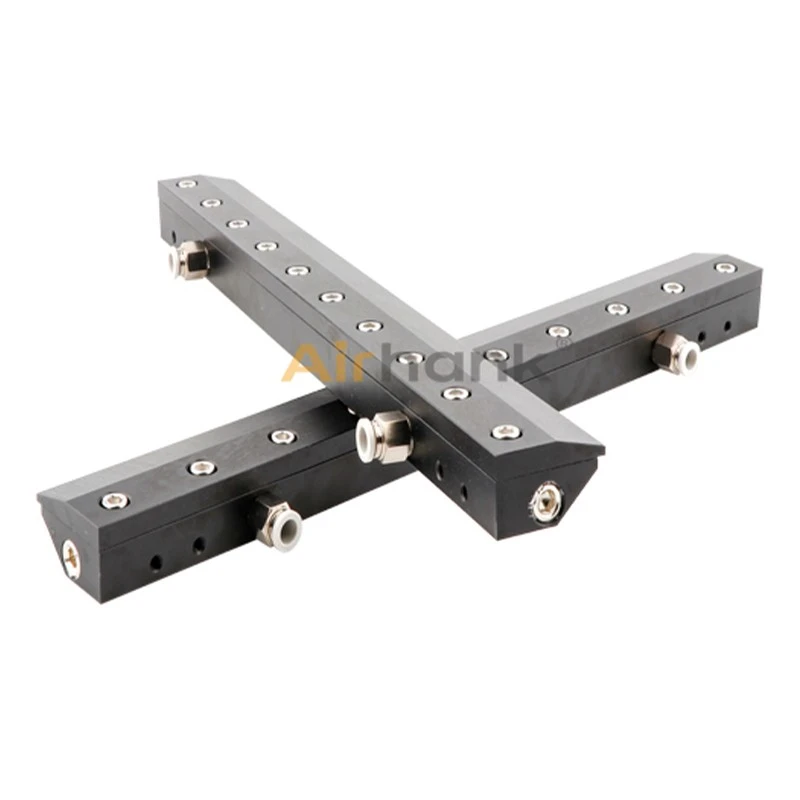
For example, if the object is a cylindrical product, the air knife may need to be installed in a circular arrangement to ensure that the air flow covers the entire circumference. In a complex production line with multiple conveyor belts and moving parts, the air knife placement needs to be carefully planned to avoid interference and ensure that the air flow reaches all the necessary areas.
Air Knife Angle Adjustment
The ability to adjust the angle of the air knife is an important feature that allows for fine - tuning of the air flow direction. Different applications may require different air flow angles. For instance, in a blow - off operation where a thin film of liquid needs to be removed from a vertical surface, the air knife may need to be angled at a specific degree to create a shearing force that can effectively remove the liquid.
As a supplier of TA super pneumatic air knives, we offer air knives with adjustable mounting brackets that allow for easy angle adjustment. This flexibility ensures that our customers can optimize the air flow direction according to their specific application requirements.
The Role of Compressed Air in Air Flow Direction
Compressed air is the driving force behind the operation of a TA super pneumatic air knife. The quality and pressure of the compressed air can also affect the air flow direction. If the compressed air is not evenly distributed within the air knife, it can cause uneven air flow, which may lead to inconsistent performance.
To ensure a stable and well - directed air flow, it is important to use a high - quality air compressor. Our Air Compressor Pneumatic Air Knife is specifically designed to work in conjunction with our TA super pneumatic air knives. It provides a consistent and reliable source of compressed air, which helps to maintain a uniform and properly directed air flow.
TA Series Air Knife Drying System
Our TA series air knife drying system is a comprehensive solution that takes into account the importance of air flow direction. The system is designed to optimize the air flow for efficient drying and cleaning operations. It includes advanced features such as adjustable air knives, precise air flow control, and integration with other industrial equipment.
The TA series air knife drying system allows for easy adjustment of the air flow direction, ensuring that it can be tailored to the specific needs of different applications. Whether it's drying a large - scale production line or cleaning a small - scale component, our TA series air knife drying system can provide the optimal air flow solution.
Conclusion
In conclusion, the air flow direction has a profound impact on the performance of a TA super pneumatic air knife. It affects the drying efficiency, cleaning effectiveness, and overall functionality of the air knife. By understanding the principles of air flow direction and using high - quality equipment, such as our Air Compressor Pneumatic Air Knife and TA series air knife drying system, customers can achieve optimal results in their industrial applications.
If you are looking for a reliable solution for your drying, cleaning, or blow - off operations, we invite you to contact us for a detailed discussion. Our team of experts is ready to help you select the right TA super pneumatic air knife and configure the air flow direction to meet your specific requirements. Let's work together to improve the efficiency and quality of your production processes.
References
- Brown, D. (2018). Industrial Air Knife Applications. Industrial Press.
- Smith, J. (2019). Principles of Compressed Air Systems. Wiley - Blackwell.
- Chen, H. (2020). Optimization of Air Flow in Pneumatic Devices. Journal of Fluid Mechanics.