

What is the air temperature at the outlet of an air compressor pneumatic air knife?
What is the air temperature at the outlet of an air compressor pneumatic air knife?
As a provider of Air Compressor Pneumatic Air Knife, I often get asked about the air temperature at the outlet of these vital industrial tools. Understanding the outlet air temperature is crucial for various industrial applications, from drying processes in food processing plants to cleaning operations in manufacturing facilities.
The Basics of Air Compression and Temperature
The relationship between air compression and temperature is governed by the laws of thermodynamics. When air is compressed, the molecules are forced closer together. This results in an increase in the internal energy of the air, which manifests as a rise in temperature. This phenomenon is described by the ideal gas law, which states that for an ideal gas, the pressure, volume, and temperature are related by the equation (PV = nRT), where (P) is the pressure, (V) is the volume, (n) is the number of moles of gas, (R) is the ideal gas constant, and (T) is the temperature in Kelvin.
When air is compressed in an air compressor, the pressure (P) increases. If the compression process occurs rapidly (adiabatic compression), there is little time for heat to escape, and the temperature (T) will rise significantly. For example, a typical industrial air compressor may compress air from atmospheric pressure (around 1 bar) to 7 bar. During this compression, the air temperature can increase from ambient temperature (say, 20°C or 293K) to well over 100°C (373K).
Factors Affecting the Outlet Air Temperature of an Air Compressor Pneumatic Air Knife
Several factors influence the air temperature at the outlet of an air compressor pneumatic air knife:
- Compression Ratio: The compression ratio is the ratio of the absolute discharge pressure to the absolute suction pressure. A higher compression ratio means more work is done on the air, resulting in a greater increase in temperature. For instance, if an air compressor has a compression ratio of 10:1, the outlet air temperature will be higher compared to one with a 5:1 compression ratio.
- Type of Compressor: Different types of air compressors have different efficiency levels and heat generation characteristics. Reciprocating compressors, for example, tend to generate more heat during the compression process compared to screw compressors. This is because reciprocating compressors use pistons to compress the air, which involves more mechanical friction and heat generation.
- Cooling System: The effectiveness of the cooling system in the air compressor plays a significant role in determining the outlet air temperature. Air compressors are typically equipped with either air - cooled or water - cooled systems. An air - cooled compressor uses fins and a fan to dissipate heat, while a water - cooled compressor uses a water jacket to remove heat from the compressed air. A well - maintained and efficient cooling system will keep the outlet air temperature lower.
- Ambient Temperature: The temperature of the surrounding air also affects the outlet air temperature of the air knife. If the ambient air temperature is high, the air entering the compressor is already warm, and the compression process will raise the temperature even further. In hot climates, additional cooling measures may be required to maintain a suitable outlet air temperature.
Importance of Outlet Air Temperature in Industrial Applications
The outlet air temperature of an air compressor pneumatic air knife is of great importance in various industrial applications:
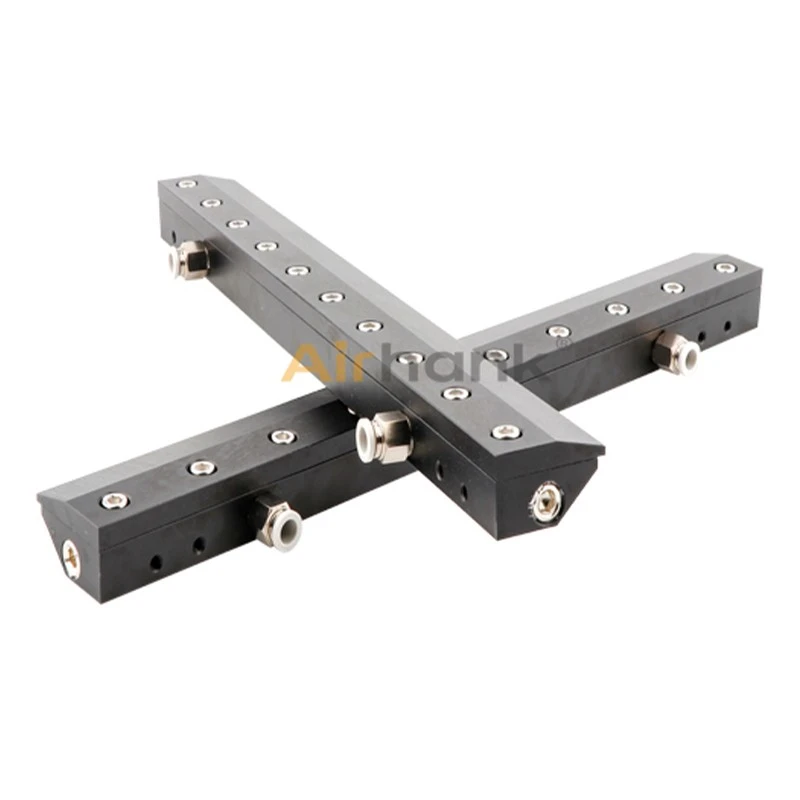
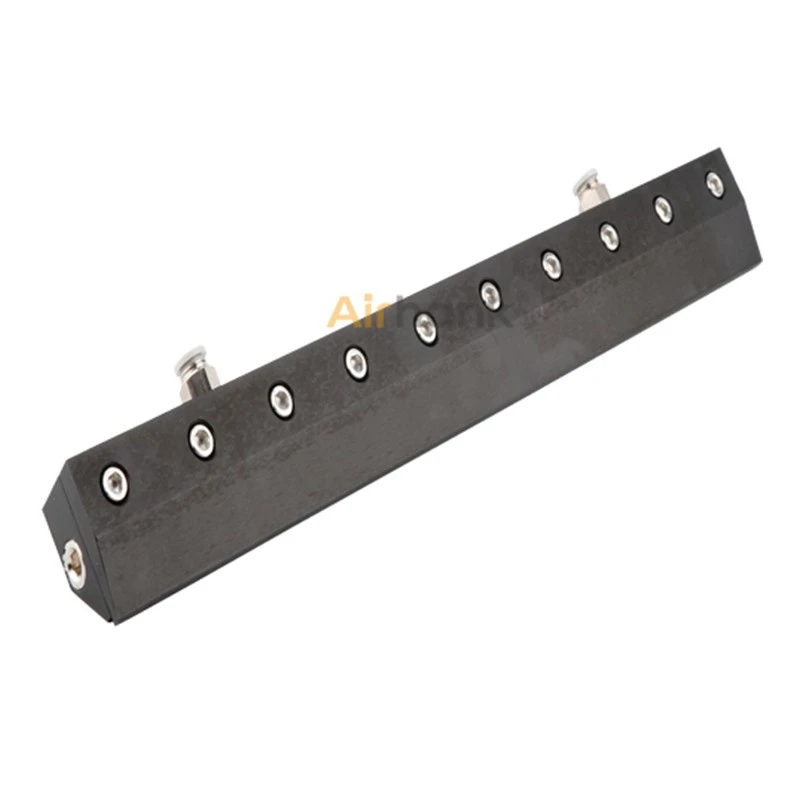
- Drying Processes: In industries such as food processing, printing, and textile manufacturing, air knives are used for drying purposes. The temperature of the outlet air affects the drying rate. Higher temperatures can accelerate the evaporation of moisture, but they may also cause damage to heat - sensitive materials. For example, in the food industry, if the air temperature is too high, it can cook or burn the food products. Therefore, it is essential to control the outlet air temperature to ensure efficient and safe drying.
- Cleaning Operations: Air knives are used to blow away dust, debris, and liquid residues from surfaces in manufacturing plants. The temperature of the outlet air can affect the effectiveness of the cleaning process. For example, warm air can help to loosen sticky residues, but it may also cause some materials to expand or deform. In precision manufacturing, where tight tolerances are required, controlling the outlet air temperature is crucial to prevent any damage to the products.
- Static Elimination: In industries where static electricity is a problem, such as electronics manufacturing and packaging, air knives can be used to neutralize static charges. The temperature of the outlet air can affect the performance of static eliminators. Higher temperatures can reduce the effectiveness of some types of static eliminators, so it is important to maintain an appropriate outlet air temperature.
Controlling the Outlet Air Temperature
To control the outlet air temperature of an air compressor pneumatic air knife, several strategies can be employed:
- Proper Sizing of the Compressor: Selecting the right - sized air compressor for the application is crucial. An oversized compressor may operate at a lower load, which can lead to inefficient cooling and higher outlet air temperatures. On the other hand, an undersized compressor may have to work harder, resulting in increased heat generation.
- Regular Maintenance of the Cooling System: Ensuring that the cooling system of the air compressor is clean and functioning properly is essential. This includes cleaning the cooling fins, checking the water flow in water - cooled systems, and replacing any worn - out cooling components.
- Use of After - Coolers: After - coolers are heat exchangers that are installed downstream of the air compressor to cool the compressed air before it reaches the air knife. They can be either air - cooled or water - cooled. After - coolers can significantly reduce the outlet air temperature, making it more suitable for various industrial applications.
- Temperature Monitoring and Control: Installing temperature sensors at the outlet of the air knife allows for real - time monitoring of the air temperature. This data can be used to adjust the operation of the air compressor or the after - cooler to maintain a consistent outlet air temperature.
At TA series air knife drying system, we understand the importance of controlling the outlet air temperature of our air compressor pneumatic air knives. Our products are designed with advanced cooling systems and temperature control features to ensure optimal performance in a wide range of industrial applications.
If you are in need of a reliable air compressor pneumatic air knife for your industrial processes and have questions about outlet air temperature or other technical aspects, we encourage you to reach out to us. We are here to provide you with the best solutions and support for your specific needs. Contact us today to start a discussion about your requirements and explore how our products can enhance your operations.
References
- Cengel, Y. A., & Boles, M. A. (2015). Thermodynamics: An Engineering Approach. McGraw - Hill Education.
- Green, D. W., & Perry, R. H. (2007). Perry's Chemical Engineers' Handbook. McGraw - Hill Professional.