

What is the air speed distribution of an aluminum alloy air knife air blade?
The air speed distribution of an aluminum alloy air knife air blade is a crucial factor that directly impacts its performance in various industrial applications. As a trusted supplier of aluminum alloy air knife air blades, we understand the significance of this aspect and are committed to providing in - depth insights into it.
The Basics of Aluminum Alloy Air Knife Air Blades
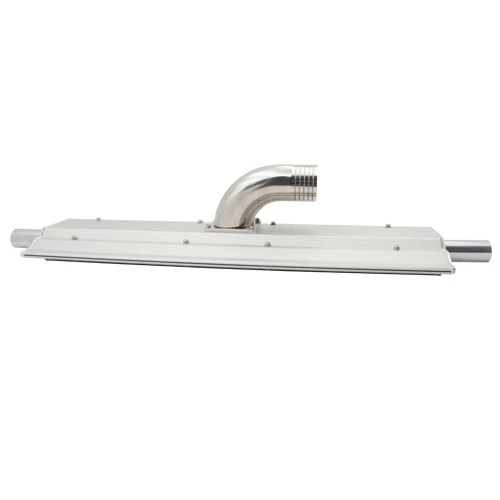
Aluminum alloy air knife air blades are widely used in industrial settings due to their lightweight, corrosion - resistant, and cost - effective nature. These air knives work by converting compressed air or blower - supplied air into a high - velocity, laminar air stream. The air is forced through a narrow slit in the air knife, creating a thin, powerful blade of air.
The air speed distribution across the length of the air blade is not uniform. It is affected by several factors, including the design of the air knife, the type of air supply, and the operating pressure. Understanding these factors is essential for optimizing the performance of the air knife in different applications.
Factors Affecting Air Speed Distribution
Design of the Air Knife
The internal structure of the aluminum alloy air knife plays a significant role in determining the air speed distribution. A well - designed air knife will have a smooth internal surface and a carefully engineered air channel. For example, some air knives are designed with a gradually narrowing air channel, which helps to accelerate the air and create a more uniform air speed across the blade.
Another design aspect is the shape and size of the air outlet slit. A narrower slit generally results in a higher air speed, but it also requires a higher air pressure. The length of the air knife also affects the air speed distribution. Longer air knives may experience more significant air pressure drops along their length, leading to a non - uniform air speed.
Air Supply
The type of air supply used with the aluminum alloy air knife can have a profound impact on the air speed distribution. Compressed air systems are commonly used, but they can be expensive to operate. On the other hand, regenerative blowers are a more energy - efficient option.
When using a regenerative blower, the air speed distribution can be more stable compared to compressed air systems. This is because blowers can provide a continuous and consistent air flow. However, the performance of the blower, such as its flow rate and pressure rating, needs to be carefully matched with the requirements of the air knife to ensure optimal air speed distribution.
Operating Pressure
The operating pressure is directly related to the air speed. Higher operating pressures generally result in higher air speeds. However, there is a limit to how much pressure can be applied without causing excessive noise or damage to the air knife.
It is important to find the right balance between the operating pressure and the desired air speed distribution. In some applications, a lower operating pressure may be sufficient to achieve the required air speed, while in others, a higher pressure may be necessary.
Measuring Air Speed Distribution
To understand the air speed distribution of an aluminum alloy air knife air blade, accurate measurement is required. There are several methods available for measuring air speed, including anemometers and pressure sensors.
Anemometers can be used to measure the air speed at different points along the length of the air blade. This provides a detailed profile of the air speed distribution. Pressure sensors can also be used to measure the air pressure, which can be correlated with the air speed using Bernoulli's principle.
By measuring the air speed distribution, we can identify any areas of non - uniformity and make adjustments to the air knife design or operating parameters. This ensures that the air knife performs optimally in the intended application.
Applications and the Importance of Air Speed Distribution
Industrial Film Drying
In industrial film drying applications, a uniform air speed distribution is crucial for achieving consistent drying results. The Industrial Film Drying Air Knife with Regenerative Blower is specifically designed to provide a high - velocity, uniform air stream for efficient film drying.
A non - uniform air speed distribution can lead to uneven drying, which may result in defects in the film, such as wrinkles or uneven thickness. By ensuring a uniform air speed across the width of the film, the air knife can effectively remove moisture and improve the quality of the final product.
Surface Cleaning
Aluminum alloy air knife air blades are also widely used for surface cleaning in industrial processes. A uniform air speed distribution helps to ensure that all areas of the surface are cleaned effectively.
In applications where debris or contaminants need to be removed from a surface, a non - uniform air speed may leave some areas uncleaned. By providing a consistent air speed across the air blade, the Aluminum Alloy Air Knife Air Blade can efficiently clean surfaces and improve the overall cleanliness of the production environment.
Cooling Applications
In cooling applications, the air speed distribution affects the cooling rate and uniformity. A well - distributed air speed can ensure that the object being cooled is cooled evenly, preventing thermal stress and potential damage.
For example, in the cooling of electronic components, a non - uniform air speed may cause some parts of the component to cool faster than others, leading to warping or failure. The air knife with a proper air speed distribution can provide a more consistent cooling effect, enhancing the reliability and performance of the components.
Our Expertise as a Supplier
As a leading supplier of aluminum alloy air knife air blades, we have extensive experience in optimizing air speed distribution. Our engineering team uses advanced simulation and testing techniques to design air knives that provide a uniform air speed across the blade.
We offer a wide range of air knives, including the SA stainless Steel Air Knife Drying system, which is designed to meet the specific requirements of different applications. Whether you need an air knife for industrial film drying, surface cleaning, or cooling, we can provide a customized solution.
We also provide comprehensive technical support to our customers. Our team can assist in selecting the right air knife, determining the optimal operating parameters, and measuring and improving the air speed distribution.
Conclusion
The air speed distribution of an aluminum alloy air knife air blade is a complex but critical factor in its performance. By understanding the factors that affect air speed distribution, accurately measuring it, and optimizing the design and operating parameters, we can ensure that the air knife performs effectively in various industrial applications.
If you are looking for a reliable supplier of aluminum alloy air knife air blades and need to optimize the air speed distribution for your specific application, we are here to help. Contact us to discuss your requirements and explore how our products can meet your needs.

References
- White, G. J. (2004). Compressed Air Handbook. Industrial Press.
- Fox, R. W., & McDonald, A. T. (2009). Introduction to Fluid Mechanics. Wiley.