

Can the ea aluminium alloy standard air knife be used for coating removal?
Hey there! As a supplier of the ea aluminium alloy standard air knife, I often get asked a bunch of questions, and one that pops up quite a bit is, "Can the ea aluminium alloy standard air knife be used for coating removal?" Well, let's dig into this topic and find out.
First off, let's talk a bit about what the ea aluminium alloy standard air knife is. It's a pretty nifty piece of equipment. Made from high - quality aluminium alloy, it's lightweight yet durable. This air knife is designed to generate a high - velocity, uniform air stream. You can check out more details about it on our Industrial Film Drying Air Knife with Regenerative Blower page.
Now, what about coating removal? Coating removal is a process used in a variety of industries, from manufacturing to automotive repair. The main goals are usually to strip old paint, varnish, or other coatings from a surface, either to prepare it for a new coating or to restore the surface to its original state.
There are several traditional methods for coating removal, such as chemical stripping, sandblasting, and mechanical grinding. Each of these methods has its own pros and cons. Chemical stripping can be very effective, but the chemicals can be hazardous to the environment and the operators. Sandblasting can leave a rough surface finish and creates a lot of dust. Mechanical grinding is labor - intensive and may cause damage to the underlying material.
So, here comes the question: Can our ea aluminium alloy standard air knife step in as an alternative for coating removal? Well, the answer isn't a straightforward yes or no.
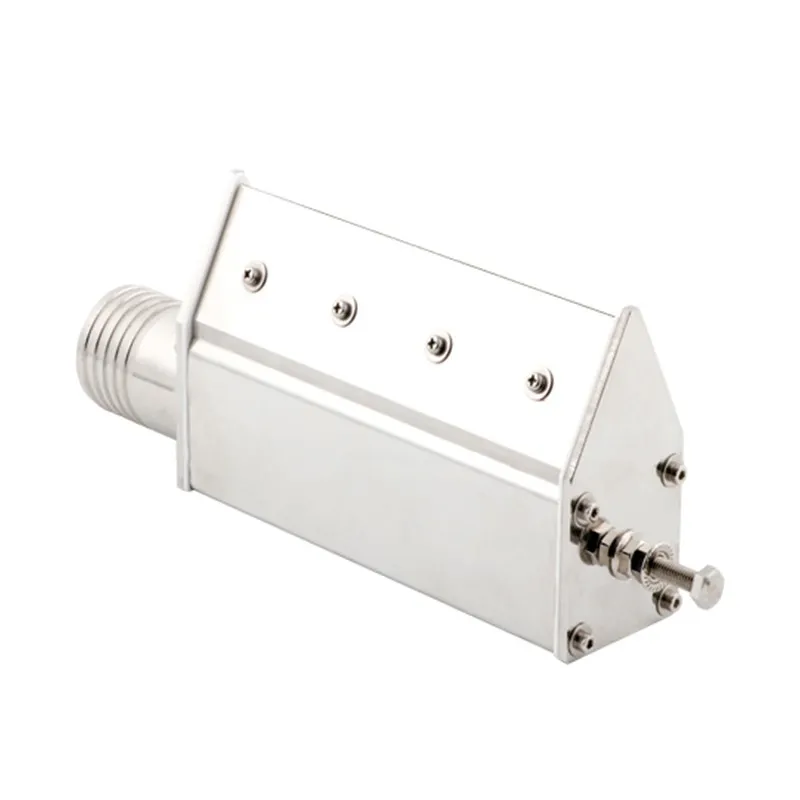

The Theory Behind Using an Air Knife for Coating Removal
The basic idea behind using an air knife for coating removal is the force of the high - velocity air stream. When the powerful air flow hits the coating, it can potentially break the bond between the coating and the substrate. If the coating is thin and not very well - adhered, the air knife might be able to blow it off.
For example, in some cases where there's a light dusting of paint over a metal surface or a thin film coating on a plastic part, the air knife could be effective. The uniform air stream can cover a relatively large area quickly, which is a big advantage in terms of efficiency.
Limitations of Using an Air Knife for Coating Removal
However, there are also some limitations. If the coating is thick, well - bonded, or has a high - strength adhesive, the air knife might not be able to remove it. Think about a thick layer of automotive paint that has been baked on at high temperatures. The air knife's air stream might not be strong enough to break the chemical bonds holding that paint to the metal surface.
Another factor is the type of substrate. Some substrates are more delicate and might be damaged by the high - velocity air. For instance, if you're trying to remove a coating from a thin plastic film, the air knife could potentially tear or deform the film.
Comparing with Other Air Knife Systems
We also offer other air knife systems like the SA stainless Steel Air Knife Drying system. Stainless steel air knives are more suitable for harsh environments or applications where corrosion resistance is crucial. If the coating removal process involves exposure to chemicals or moisture, the stainless steel air knife might be a better choice.
On the other hand, our Aluminum Alloy Air Knife Air Blade is similar to the ea aluminium alloy standard air knife but may have different specifications in terms of air flow rate and pressure. It's important to choose the right air knife according to the specific requirements of the coating removal task.
Real - World Applications
In real - world scenarios, the ea aluminium alloy standard air knife has been used in some light coating removal jobs. For example, in a small - scale electronics manufacturing plant, they used it to remove a thin layer of protective coating from circuit boards. The air knife was able to cleanly remove the coating without damaging the delicate components on the board.
But for larger - scale operations, such as industrial automotive coating removal, it's usually used in combination with other methods. The air knife can be used first to remove the loose or weakly - bonded parts of the coating, and then the remaining coating can be stripped using chemical or mechanical methods.
Factors to Consider
If you're thinking about using an ea aluminium alloy standard air knife for coating removal, there are a few factors you need to consider. First, the type of coating: Is it water - based, solvent - based, or powder - coated? Second, the thickness of the coating: Thicker coatings will be more difficult to remove. Third, the substrate material: Different materials can withstand different levels of air pressure and flow.
Conclusion
So, can the ea aluminium alloy standard air knife be used for coating removal? It can, but with limitations. For light coatings and in some specific applications, it can be a great, efficient, and environmentally - friendly option. However, for more challenging coating removal tasks, it might need to be used in conjunction with other methods.
If you're interested in exploring the use of our ea aluminium alloy standard air knife for your coating removal needs, or if you have any questions about our other air knife products, feel free to contact us to start a procurement discussion. We're here to help you find the best solution for your industrial needs.
References
- "Industrial Air Knife Handbook", Industrial Equipment Publishing
- Research papers on coating removal techniques, Journal of Material Processing Technology