

Can an aluminum alloy air knife air blade be used in a chemical industry environment?
As a supplier of aluminum alloy air knife air blades, I often receive inquiries from customers in the chemical industry regarding the suitability of our products for their specific environments. The chemical industry presents unique challenges due to the presence of corrosive chemicals, high temperatures, and potentially explosive atmospheres. In this blog post, I will explore the factors to consider when determining whether an aluminum alloy air knife air blade can be used in a chemical industry environment.
Understanding Aluminum Alloy Air Knife Air Blades
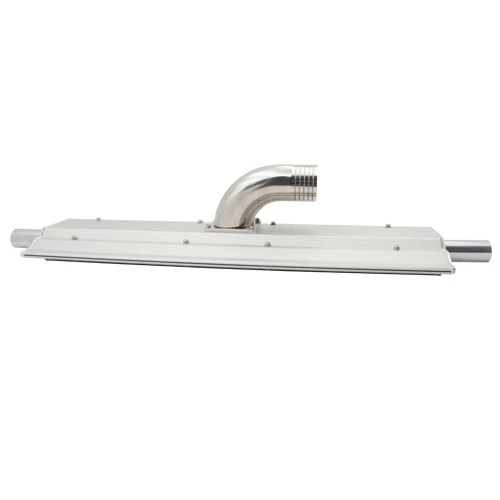
Aluminum alloy air knife air blades are designed to produce a high-velocity, uniform air stream for various industrial applications, such as drying, cleaning, and coating. They are typically made from high-quality aluminum alloys, which offer several advantages, including lightweight, high strength, and good corrosion resistance. The air knives are available in different sizes and configurations to meet the specific requirements of different applications.
Factors to Consider in a Chemical Industry Environment
Corrosion Resistance
One of the primary concerns in a chemical industry environment is the corrosion of equipment due to the presence of corrosive chemicals. Aluminum alloys have a natural oxide layer that provides some degree of corrosion resistance. However, the effectiveness of this oxide layer depends on the specific chemicals present in the environment. Some chemicals, such as acids and alkalis, can react with the aluminum alloy and break down the oxide layer, leading to corrosion.
To determine the suitability of an aluminum alloy air knife air blade for a particular chemical environment, it is essential to consider the type and concentration of the chemicals, as well as the temperature and humidity conditions. In some cases, the aluminum alloy may need to be coated or treated to enhance its corrosion resistance. For example, anodizing is a common surface treatment that can significantly improve the corrosion resistance of aluminum alloys.
Temperature Resistance
The chemical industry often involves high-temperature processes, which can affect the performance and durability of equipment. Aluminum alloys have a relatively low melting point compared to other metals, such as stainless steel. Therefore, it is important to ensure that the aluminum alloy air knife air blade can withstand the maximum temperature expected in the application.
Most aluminum alloys can withstand temperatures up to 200-300°C (392-572°F) without significant loss of strength. However, if the temperature exceeds this range, the aluminum alloy may become soft and deform, leading to a decrease in the performance of the air knife. In such cases, it may be necessary to use a different material, such as stainless steel, which has a higher melting point and better temperature resistance.
Chemical Compatibility
In addition to corrosion and temperature resistance, it is also important to consider the chemical compatibility of the aluminum alloy air knife air blade with the chemicals used in the process. Some chemicals may react with the aluminum alloy and produce hazardous by-products or affect the quality of the product being processed.
Before using an aluminum alloy air knife air blade in a chemical industry environment, it is recommended to conduct a chemical compatibility test to ensure that there are no adverse reactions between the air knife and the chemicals. This can be done by exposing a sample of the aluminum alloy to the chemicals under the expected operating conditions and monitoring for any signs of corrosion, discoloration, or other changes.
Explosion Hazard
The chemical industry often deals with flammable and explosive substances, which pose a significant safety risk. In such environments, it is essential to ensure that the equipment used is designed to prevent the ignition of these substances. Aluminum alloys are generally considered to be non-sparking materials, which makes them suitable for use in potentially explosive atmospheres.
However, it is important to note that the air knife air blade may generate static electricity during operation, which can potentially ignite flammable gases or dust. To prevent this, the air knife should be properly grounded and equipped with anti-static devices, such as ionizing bars or static eliminators.
Applications of Aluminum Alloy Air Knife Air Blades in the Chemical Industry
Despite the challenges posed by the chemical industry environment, aluminum alloy air knife air blades can be used in a variety of applications, provided that the appropriate precautions are taken. Some common applications of aluminum alloy air knife air blades in the chemical industry include:
Drying and Cleaning
Aluminum alloy air knife air blades are commonly used for drying and cleaning applications in the chemical industry. They can be used to remove moisture, chemicals, or other contaminants from the surface of products or equipment. For example, in the production of chemical films, air knife air blades can be used to dry the films after coating, ensuring a uniform and high-quality finish.
Coating and Painting
Air knife air blades can also be used for coating and painting applications in the chemical industry. They can be used to apply a thin, uniform layer of coating or paint to the surface of products or equipment. For example, in the production of chemical containers, air knife air blades can be used to apply a protective coating to the containers, preventing corrosion and extending their lifespan.

Ventilation and Exhaust
In some chemical processes, it is necessary to remove hazardous gases or fumes from the work area. Aluminum alloy air knife air blades can be used to create a high-velocity air stream that can effectively ventilate and exhaust these gases or fumes. For example, in a chemical laboratory, air knife air blades can be used to create a laminar flow of air over the workbench, preventing the accumulation of hazardous chemicals.
Conclusion
In conclusion, an aluminum alloy air knife air blade can be used in a chemical industry environment, provided that the appropriate precautions are taken. When considering the use of an aluminum alloy air knife air blade in a chemical industry environment, it is important to consider the factors discussed above, such as corrosion resistance, temperature resistance, chemical compatibility, and explosion hazard. By carefully evaluating these factors and selecting the appropriate air knife air blade, it is possible to ensure the safe and efficient operation of the equipment in the chemical industry.
If you are interested in learning more about our Aluminum Alloy Air Knife Air Blade or other air knife products, please feel free to contact us. Our team of experts will be happy to assist you in selecting the right air knife for your specific application. We also offer a range of related products, such as the SA stainless Steel Air Knife Drying system and the Industrial Film Drying Air Knife with Regenerative Blower, which may be suitable for your chemical industry needs.
References
- ASM Handbook, Volume 2: Properties and Selection: Nonferrous Alloys and Special-Purpose Materials. ASM International, 1990.
- Corrosion Resistance of Aluminum Alloys. Aluminum Association, 2003.
- Safety in the Chemical Industry. Chemical Safety and Hazard Investigation Board, 2010.