

Can an aluminum alloy air knife air blade be used for liquid removal?
Hey there! As a supplier of aluminum alloy air knife air blades, I often get asked if these nifty tools can be used for liquid removal. Well, let's dive right into it and explore the ins and outs of using an aluminum alloy air knife air blade for this purpose.
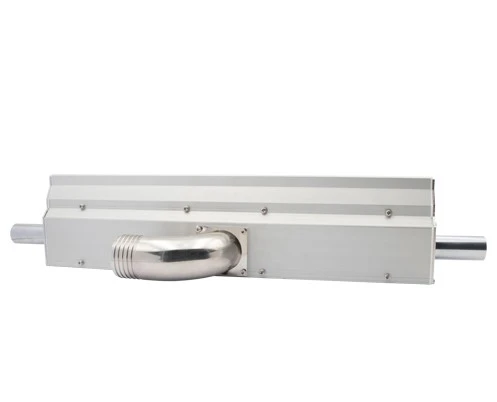
First off, let's understand what an aluminum alloy air knife air blade is. It's a device that generates a high - velocity, uniform air stream. The air comes out in a thin, flat blade - like shape, which is super effective for various industrial applications. Aluminum alloy is a popular choice for making these air knives because it's lightweight, corrosion - resistant, and relatively inexpensive compared to some other materials.
Now, can it be used for liquid removal? The short answer is yes! And here's why.
How it Works for Liquid Removal
When you have a surface covered with liquid, the high - velocity air stream from the aluminum alloy air knife air blade blows across it. This air stream creates a force that pushes the liquid off the surface. The uniform nature of the air blade ensures that the liquid is removed evenly, leaving behind a dry surface.
Let's say you're in a manufacturing plant where you're producing glass panels. After the cleaning process, these panels are wet. By using an Aluminum Alloy Air Knife Air Blade positioned at the right angle, you can quickly and efficiently remove the water from the glass. The air knife can cover a large area in a short time, which means you can increase your production speed.
Advantages of Using Aluminum Alloy Air Knife Air Blades for Liquid Removal
- Efficiency: These air knives can remove liquid much faster than traditional methods like wiping or using absorbent materials. The high - velocity air stream does the job in seconds, reducing the time it takes to dry products.
- Cost - effective: Aluminum alloy is an affordable material, so the initial investment in an air knife is relatively low. Also, since it uses compressed air, the operating costs are lower compared to some other drying methods that might require electricity - intensive equipment.
- Versatility: You can use an aluminum alloy air knife air blade on a wide range of surfaces and products. Whether it's metal sheets, plastic parts, or even food products, as long as the air knife is properly adjusted, it can remove the liquid effectively.
- No contact: Unlike wiping or using brushes, the air knife doesn't come into direct contact with the surface. This is great for delicate products that could be damaged by physical contact. For example, in the electronics industry, where you don't want to scratch or damage sensitive components, an air knife is the perfect solution for removing any residual cleaning liquid.
Applications in Different Industries
- Automotive Industry: After painting or washing car parts, an Aluminum Alloy Air Knife Air Blade can be used to quickly dry the parts. This helps in speeding up the production process and also ensures that the paint adheres properly to a dry surface.
- Food and Beverage Industry: In food processing plants, products like fruits and vegetables are often washed before packaging. An air knife can remove the excess water, which helps in preventing mold growth and also makes the packaging process cleaner.
- Printing Industry: After printing on paper or other materials, the ink needs to dry. An air knife can be used to accelerate the drying process, allowing for faster production rates.
Comparing with Other Liquid Removal Methods
Let's take a look at how an aluminum alloy air knife air blade stacks up against other common liquid removal methods.

- Wiping: Wiping is a slow and labor - intensive process. It also requires a lot of cleaning materials, which can be costly in the long run. And there's always a risk of leaving behind lint or scratches on the surface. In contrast, an air knife is fast, doesn't leave any residue, and doesn't damage the surface.
- Heating: Using heat to dry a surface can be energy - intensive and might not be suitable for all materials. Some materials can warp or melt under high heat. An air knife uses compressed air, which is a more energy - efficient and gentle way to remove liquid.
Limitations and Considerations
Of course, like any tool, an aluminum alloy air knife air blade isn't perfect. There are a few limitations and things to consider.
- Air pressure and flow: You need to adjust the air pressure and flow rate correctly. If the air pressure is too low, the liquid won't be removed effectively. If it's too high, it might cause splashing or even damage the product.
- Noise: Air knives can be quite noisy, especially at high air pressures. You might need to take noise - reduction measures in your workplace to comply with safety regulations.
- Contamination: If the compressed air isn't clean, it can introduce contaminants to the surface. So, you need to have proper air filtration systems in place.
Related Products
If you're interested in other air knife products, we also offer the SA stainless Steel Air Knife Drying system. This system is made of stainless steel, which is even more corrosion - resistant than aluminum alloy. It's great for applications where the environment is more harsh, like in the chemical industry.
Another option is the Industrial Film Drying Air Knife with Regenerative Blower. This product is specifically designed for drying industrial films and uses a regenerative blower, which provides a continuous and stable air supply.
Conclusion
So, to sum it up, an aluminum alloy air knife air blade is a great option for liquid removal. It's efficient, cost - effective, and versatile. While it has some limitations, with proper adjustment and maintenance, it can be a valuable addition to your production line.
If you're interested in learning more about our aluminum alloy air knife air blades or any of our other products, feel free to reach out. Let's have a chat about how we can help you with your liquid removal needs. Whether you're a small - scale manufacturer or a large industrial plant, we've got the right solution for you.
References
- Perry, R. H., & Green, D. W. (1997). Perry's Chemical Engineers' Handbook. McGraw - Hill.
- ASHRAE Handbook: Fundamentals. (2017). American Society of Heating, Refrigerating and Air - Conditioning Engineers.