

Can a rotary air spray gun be used for spraying on rubber surfaces?
Hey there! I'm a supplier of rotary air spray guns, and I often get asked this question: Can a rotary air spray gun be used for spraying on rubber surfaces? Well, let's dive right into it and find out.
First off, let's talk about what a rotary air spray gun is. It's a nifty tool that uses compressed air to atomize paint or other coatings and spray them onto a surface. The rotary part comes from the rotating nozzle, which helps to distribute the spray more evenly. It's commonly used in automotive, industrial, and even some DIY projects.
Now, when it comes to rubber surfaces, things get a bit tricky. Rubber has its own unique properties that can affect how well a spray gun works. For starters, rubber is flexible and elastic. This means that the coating needs to be able to stretch and bend along with the rubber without cracking or peeling.
One of the main advantages of using a rotary air spray gun on rubber surfaces is the even distribution of the coating. The rotating nozzle ensures that the paint or coating is spread uniformly, which is crucial for a smooth and professional finish. This is especially important when you're dealing with rubber parts that are visible, like automotive trim or rubber gaskets.
Another benefit is the ability to control the spray pattern. With a rotary air spray gun, you can adjust the width and intensity of the spray to suit the size and shape of the rubber surface you're working on. This gives you more flexibility and precision, allowing you to cover large areas quickly or focus on small, detailed areas.
However, there are also some challenges to using a rotary air spray gun on rubber. One of the biggest issues is adhesion. Rubber is a non-porous material, which means that it can be difficult for the coating to stick to it. To overcome this, you'll need to use a primer specifically designed for rubber surfaces. This will help to create a better bond between the rubber and the coating, ensuring that it lasts longer.
Another challenge is the drying time. Rubber tends to retain heat, which can slow down the drying process. This means that you'll need to be patient and allow the coating to dry completely before handling the rubber part. You may also need to use a fan or a heat gun to speed up the drying process, but be careful not to overheat the rubber, as this can cause it to warp or crack.
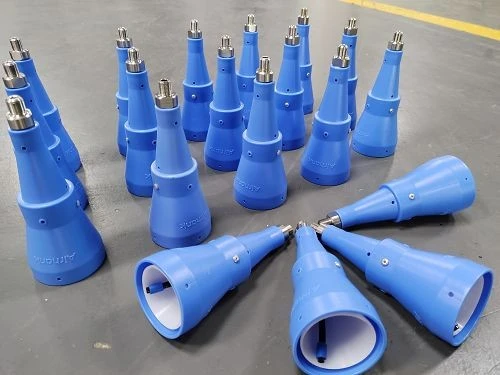
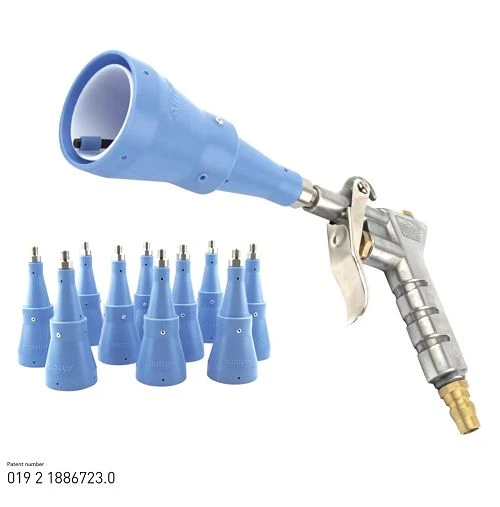
So, can a rotary air spray gun be used for spraying on rubber surfaces? The answer is yes, but with some considerations. As long as you use the right primer, control the spray pattern, and allow enough drying time, you can achieve a great finish on rubber surfaces.
Now, let's talk about our 50mm Air Spray Gun Nozzle Air Compressor. This is a top-of-the-line product that's perfect for spraying on rubber surfaces. It has a large 50mm nozzle, which allows for a wide spray pattern and fast coverage. The rotary design ensures an even distribution of the coating, and the adjustable air pressure gives you full control over the spray.
If you're in the market for a rotary air spray gun for your rubber spraying needs, we'd love to hear from you. We offer high-quality products at competitive prices, and our team of experts is always on hand to provide you with advice and support. Whether you're a professional painter or a DIY enthusiast, we have the right solution for you.
So, don't hesitate to reach out and start a conversation with us. We're here to help you get the best results with your rubber spraying projects. Let's work together to make your next project a success!
References:
- "Spraying Techniques for Rubber Surfaces" - Industrial Coating Magazine
- "The Science of Adhesion on Rubber" - Journal of Polymer Science