

What is the impact of the impeller design on the performance of an rbg double stage side channel blower?
The impeller is a crucial component in an RBG double stage side channel blower, significantly influencing its performance. As a supplier of RBG double stage side channel blowers, I've witnessed firsthand the importance of impeller design in determining the blower's efficiency, pressure generation, and overall functionality.
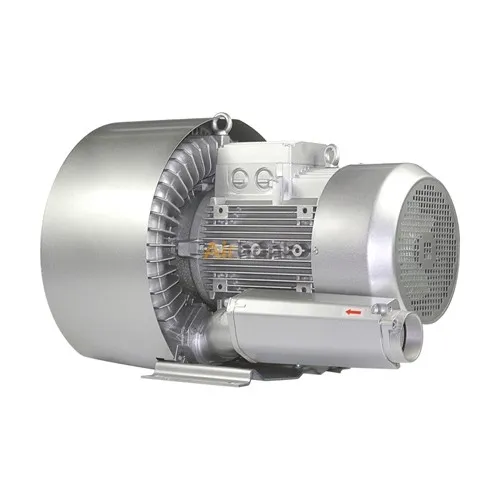
1. Basic Principles of RBG Double Stage Side Channel Blowers
Before delving into the impact of impeller design, it's essential to understand the basic working principles of an RBG double stage side channel blower. These blowers operate on the principle of centrifugal force. The impeller rotates at high speed, drawing air into the side channel. As the air moves through the channel, it gains energy from the impeller blades, resulting in increased pressure and flow rate. The double - stage design further enhances the performance by compressing the air in two consecutive stages, achieving higher pressures compared to single - stage blowers.
2. Influence of Impeller Geometry on Blower Performance
2.1 Blade Shape
The shape of the impeller blades plays a vital role in determining the blower's performance. There are different blade shapes commonly used, such as forward - curved, backward - curved, and radial blades.
- Forward - curved blades: These blades are designed to curve in the direction of rotation. They can generate high flow rates at relatively low rotational speeds. However, they are also more prone to cavitation and have lower efficiency compared to other blade shapes. In an RBG double stage side channel blower, forward - curved blades might be suitable for applications where a large volume of air needs to be moved quickly, such as in some ventilation systems.
- Backward - curved blades: Backward - curved blades curve in the opposite direction of rotation. They offer higher efficiency and better stability over a wide range of operating conditions. These blades are less likely to experience cavitation and can generate higher pressures. For industrial applications where energy efficiency and stable pressure are crucial, such as in pneumatic conveying systems, RBG double stage side channel blowers with backward - curved blades are often preferred.
- Radial blades: Radial blades are straight and extend radially from the impeller hub. They provide a balance between flow rate and pressure generation. Radial blades are relatively simple to manufacture and are suitable for applications where a moderate amount of pressure and flow is required.
2.2 Blade Number
The number of blades on the impeller also affects the blower's performance. A larger number of blades can increase the pressure rise and improve the efficiency of the blower. However, too many blades can lead to increased friction losses and reduced flow rate. In an RBG double stage side channel blower, the optimal number of blades is determined through a combination of theoretical calculations and experimental testing. Generally, a moderate number of blades is chosen to balance the pressure generation, flow rate, and efficiency.
2.3 Impeller Diameter
The diameter of the impeller has a direct impact on the blower's performance. A larger impeller diameter can generate higher pressures and flow rates. However, it also requires more power to drive the impeller. In practical applications, the impeller diameter is selected based on the specific requirements of the system. For example, in a small - scale laboratory ventilation system, a smaller impeller diameter might be sufficient to meet the air - flow requirements. On the other hand, in a large - scale industrial process where high pressures and flow rates are needed, a larger impeller diameter would be more appropriate.
3. Impact of Impeller Design on Efficiency
Efficiency is a critical factor in the performance of an RBG double stage side channel blower. The impeller design can significantly affect the blower's efficiency in several ways.
- Aerodynamic Efficiency: A well - designed impeller with optimized blade shape and geometry can minimize the aerodynamic losses within the blower. This includes reducing the turbulence and eddy formation in the side channel, which in turn reduces the energy consumption of the blower. For example, a backward - curved blade design can achieve higher aerodynamic efficiency compared to a forward - curved blade design.
- Mechanical Efficiency: The impeller design also affects the mechanical efficiency of the blower. A balanced impeller with proper material selection and manufacturing precision can reduce the vibration and friction losses. This not only improves the efficiency but also extends the service life of the blower. For instance, using high - quality materials with low friction coefficients for the impeller can reduce the mechanical losses.
4. Impact on Pressure Generation
The impeller design is directly related to the pressure generation capacity of the RBG double stage side channel blower.
- Blade Angle and Pressure Rise: The angle of the impeller blades determines the amount of energy transferred to the air. A steeper blade angle can generate higher pressures, but it may also reduce the flow rate. In an RBG double stage side channel blower, the blade angle is carefully designed to achieve the desired balance between pressure and flow.
- Multi - stage Effect: In a double - stage design, the impeller in each stage contributes to the overall pressure rise. The design of the impellers in both stages needs to be coordinated to ensure smooth air flow and efficient pressure build - up. For example, the impeller in the first stage may be designed to provide an initial pressure boost, while the impeller in the second stage further increases the pressure to the required level.
5. Applications and the Role of Impeller Design
The performance requirements of different applications determine the optimal impeller design for an RBG double stage side channel blower.
- Ventilation Systems: In ventilation systems, a high flow rate is often required to ensure proper air circulation. An impeller with a large diameter and forward - curved blades might be suitable for this application. Our 2HP 1.5KW Multi Stage Side Channel Blower can be a great choice for small to medium - sized ventilation systems, providing a sufficient volume of air at a relatively low pressure.
- Pneumatic Conveying: Pneumatic conveying systems require high pressures to transport materials through pipelines. An impeller with backward - curved blades and a larger number of blades is preferred in this case. Our 3HP 2.2KW Dual - frequency Air Pump Blower is well - suited for pneumatic conveying applications, offering high pressure and stable performance.
6. Conclusion and Call to Action
In conclusion, the impeller design has a profound impact on the performance of an RBG double stage side channel blower. From blade shape and number to impeller diameter, every aspect of the impeller design affects the blower's efficiency, pressure generation, and suitability for different applications. As a supplier of RBG double stage side channel blowers, we understand the importance of these design factors and strive to provide the best - suited blowers for our customers' needs.
If you are in the market for an RBG double stage side channel blower and want to discuss your specific requirements, we are here to help. Our team of experts can provide you with detailed information and guidance on selecting the right blower based on your application. Contact us today to start the procurement discussion and find the perfect solution for your needs.

References
- Stepanoff, A. J. (1957). Centrifugal and Axial Flow Pumps: Theory, Design, and Application. Wiley.
- Pfleiderer, C., & Petermann, B. (1986). Turbomachinery: Fundamentals and Applications. Springer.
- Cumpsty, N. A. (2004). Jet Propulsion: A Simple Guide to the Aerodynamics and Thermodynamics of Aircraft Engine. Cambridge University Press.