

What is the frequency of the power supply for a 3hp 2.2kw industrial air blower?
When it comes to industrial air blowers, one of the most frequently asked questions is about the power supply frequency. As a supplier of 3hp 2.2kw industrial air blowers, I am often approached by customers who want to understand the ideal frequency for these powerful machines. In this blog post, I will delve into the topic of power supply frequency for 3hp 2.2kw industrial air blowers, providing you with all the necessary information to make an informed decision.
Understanding Power Supply Frequency
Power supply frequency refers to the number of cycles per second in an alternating current (AC) power system. It is measured in Hertz (Hz). The most common power supply frequencies around the world are 50Hz and 60Hz. These frequencies are standardized in different regions, with most of Europe, Asia, and Africa using 50Hz, while North America and parts of South America use 60Hz.
The frequency of the power supply has a direct impact on the performance of electrical equipment, including industrial air blowers. It affects the speed of the motor, which in turn influences the blower's airflow rate, pressure, and power consumption. Therefore, it is crucial to match the power supply frequency of the blower with the available power grid in your area.
Frequency and 3hp 2.2kw Industrial Air Blowers
A 3hp 2.2kw industrial air blower is a high - performance machine designed for various industrial applications, such as ventilation, aeration, and material handling. The motor of a 3hp 2.2kw air blower is engineered to operate optimally at a specific power supply frequency.
Most 3hp 2.2kw industrial air blowers are available in two versions: one for 50Hz power supply and another for 60Hz power supply. When a blower designed for 50Hz is operated on a 60Hz power supply, the motor speed will increase by approximately 20%. This increase in speed can lead to a higher airflow rate and pressure, but it may also cause the motor to overheat and reduce its lifespan. On the other hand, if a 60Hz blower is operated on a 50Hz power supply, the motor speed will decrease, resulting in lower airflow and pressure.
Choosing the Right Frequency
When selecting a 3hp 2.2kw industrial air blower, it is essential to consider the power supply frequency of your location. If you are in a region with a 50Hz power grid, you should choose a blower designed for 50Hz operation. Similarly, if your area uses a 60Hz power supply, opt for a 60Hz blower.
It is also important to note that some industrial air blowers are designed to be frequency - adjustable. These blowers can operate at different frequencies, allowing for greater flexibility in various applications. However, frequency - adjustable blowers are generally more expensive than their fixed - frequency counterparts.
Our Product Range
As a leading supplier of industrial air blowers, we offer a wide range of 3hp 2.2kw air blowers suitable for both 50Hz and 60Hz power supplies. Our blowers are known for their high efficiency, reliability, and durability.

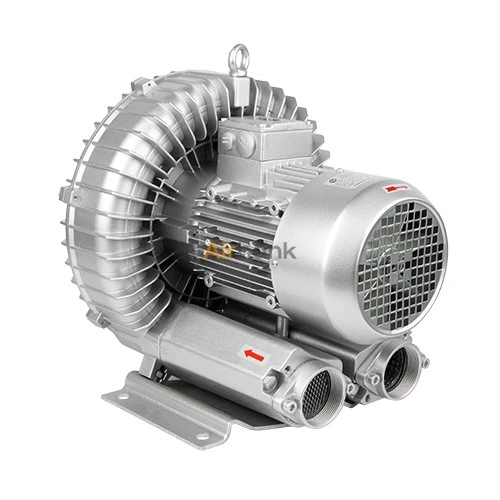
In addition to our 3hp 2.2kw blowers, we also have other high - quality products in our catalog. For example, we offer the 1.5HP Vacuum Pump Air Blower, which is ideal for applications requiring a lower power consumption. The RBG320 1D3B High - Pressure Aeration Blower is another excellent option for high - pressure aeration tasks. And if you need a more powerful blower, our 7.5KW Soplador De Aire Ring Blower is a great choice.
Factors Affecting Blower Performance
Apart from power supply frequency, several other factors can affect the performance of a 3hp 2.2kw industrial air blower. These include the type of motor, the design of the impeller, and the operating environment.
The type of motor used in the blower plays a significant role in its performance. We use high - quality motors in our blowers, which are designed to provide maximum torque and efficiency. The impeller design also affects the airflow and pressure of the blower. Our blowers feature specially designed impellers that are optimized for high - performance operation.
The operating environment can also impact the blower's performance. For example, if the blower is used in a dusty or humid environment, it may require more frequent maintenance to ensure optimal performance. We recommend regular cleaning and inspection of the blower to prevent any potential issues.
Maintenance and Troubleshooting
Proper maintenance is essential to ensure the long - term performance and reliability of your 3hp 2.2kw industrial air blower. Regular maintenance tasks include checking the motor's lubrication, inspecting the belts and pulleys, and cleaning the air intake and outlet.
If you encounter any problems with your blower, it is important to troubleshoot the issue promptly. Some common problems include motor overheating, abnormal noise, and reduced airflow. In most cases, these issues can be resolved by following the troubleshooting guide provided in the blower's user manual. However, if the problem persists, it is recommended to contact a professional technician for assistance.
Conclusion
In conclusion, the power supply frequency is a critical factor to consider when choosing a 3hp 2.2kw industrial air blower. Matching the blower's frequency with the available power grid in your area is essential to ensure optimal performance and prevent damage to the motor.
As a trusted supplier of industrial air blowers, we are committed to providing our customers with high - quality products and excellent customer service. Whether you need a 3hp 2.2kw blower for a 50Hz or 60Hz power supply, we have the right solution for you.
If you are interested in our products or have any questions about power supply frequency and industrial air blowers, please feel free to contact us for procurement and further discussion. We look forward to serving you and helping you find the perfect blower for your industrial needs.
References
- Electrical Engineering Principles and Applications, Fourth Edition by Allan R. Hambley
- Industrial Ventilation: A Manual of Recommended Practice, 29th Edition by the American Conference of Governmental Industrial Hygienists