

What are the heat dissipation requirements for a high speed centrifugal blower?
As a supplier of high-speed centrifugal blowers, I understand the critical importance of heat dissipation in these powerful machines. High-speed centrifugal blowers are designed to deliver high volumes of air at high pressures, which generates a significant amount of heat during operation. If this heat is not properly managed, it can lead to a range of issues, including reduced efficiency, increased wear and tear, and even premature failure of the blower. In this blog post, I will discuss the heat dissipation requirements for high-speed centrifugal blowers and how we ensure our products meet these requirements.
Understanding the Heat Generation in High-Speed Centrifugal Blowers
Before delving into the heat dissipation requirements, it's essential to understand how heat is generated in high-speed centrifugal blowers. These blowers operate by accelerating air using a rotating impeller. The energy input into the blower to drive the impeller and compress the air is converted into kinetic energy of the air and heat. The compression process, in particular, is adiabatic, which means that the temperature of the air increases as it is compressed. Additionally, the mechanical friction between the moving parts, such as the bearings and the impeller shaft, also contributes to heat generation.
The heat generated in a high-speed centrifugal blower can have several negative effects. First, it can cause the air temperature to rise significantly, which may not be suitable for applications where a specific air temperature is required. Second, excessive heat can lead to thermal expansion of the blower components, which can affect the alignment and clearances between the parts. This, in turn, can increase the wear and tear on the components and reduce the overall efficiency of the blower. Finally, high temperatures can also degrade the lubricants used in the bearings and other moving parts, leading to premature failure.
Heat Dissipation Requirements
To ensure the reliable and efficient operation of high-speed centrifugal blowers, it is necessary to dissipate the generated heat effectively. The heat dissipation requirements depend on several factors, including the power rating of the blower, the operating conditions, and the design of the blower.
Power Rating
The power rating of a high-speed centrifugal blower is a key factor in determining the heat dissipation requirements. Generally, the higher the power rating, the more heat is generated. For example, a large industrial blower with a power rating of several hundred kilowatts will generate significantly more heat than a small blower used in a laboratory setting. As a rule of thumb, the heat dissipation capacity should be proportional to the power input of the blower.
Operating Conditions
The operating conditions, such as the ambient temperature and the inlet air temperature, also affect the heat dissipation requirements. In hot environments, the blower will have a harder time dissipating heat because the temperature difference between the blower and the surroundings is smaller. Similarly, if the inlet air temperature is high, the temperature of the compressed air will be even higher, requiring more effective heat dissipation.
Blower Design
The design of the high-speed centrifugal blower can also influence the heat dissipation requirements. For example, blowers with a more compact design may have less surface area available for heat transfer, which means that they may require more advanced cooling methods. Additionally, the type of impeller and the housing design can affect the airflow patterns inside the blower, which can impact the heat dissipation efficiency.
Heat Dissipation Methods
There are several methods used to dissipate heat from high-speed centrifugal blowers, each with its own advantages and disadvantages.
Air Cooling
Air cooling is one of the most common methods used to dissipate heat from high-speed centrifugal blowers. In this method, a fan is used to blow air over the blower components, such as the motor and the housing. The moving air carries away the heat by convection. Air cooling is relatively simple and cost-effective, but it may not be sufficient for high-power blowers or in hot environments.
Water Cooling
Water cooling is a more efficient method of heat dissipation compared to air cooling. In a water-cooled system, water is circulated through a cooling jacket or a heat exchanger attached to the blower. The water absorbs the heat from the blower components and transfers it to a radiator or a cooling tower, where it is dissipated into the environment. Water cooling can provide better temperature control and is suitable for high-power blowers and applications where precise temperature control is required. However, it is more complex and expensive than air cooling, and it requires a reliable water supply and a proper drainage system.
Oil Cooling
Oil cooling is another method used in some high-speed centrifugal blowers, especially those with high-speed bearings. In this method, oil is circulated through the bearings to lubricate and cool them. The oil absorbs the heat generated by the bearings and transfers it to an oil cooler, where it is dissipated. Oil cooling can provide excellent cooling for the bearings and help to extend their service life. However, it also requires a complex oil circulation system and regular maintenance.
Our Approach to Heat Dissipation
As a supplier of high-speed centrifugal blowers, we take the heat dissipation requirements very seriously. We design our blowers with efficient cooling systems to ensure that they can operate reliably under various conditions.
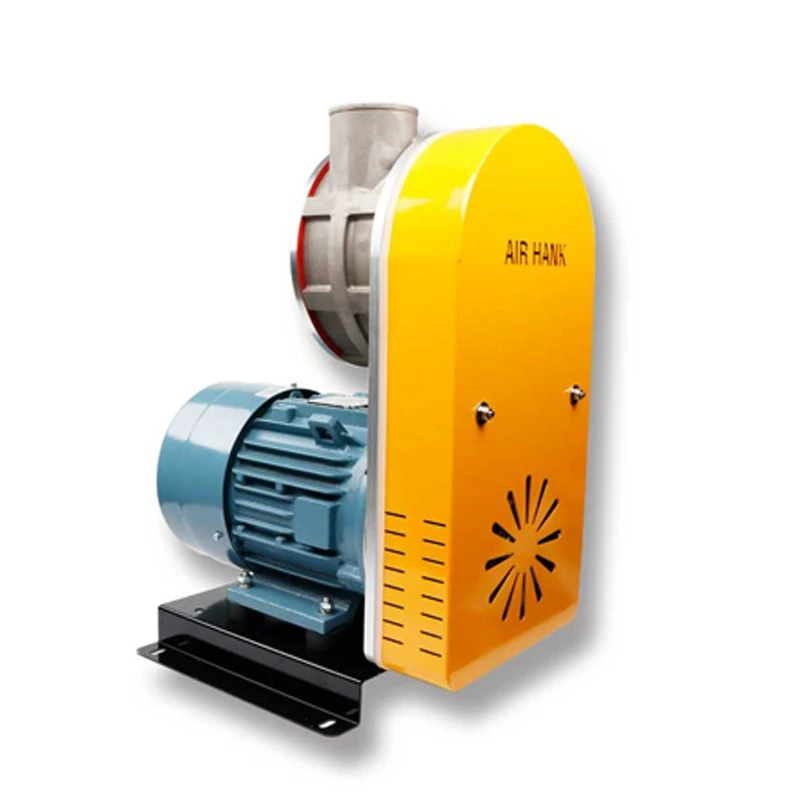
For our High-Speed Energy-Efficient Drying System BlowerDPT-300, we use a combination of air and water cooling methods. The motor is air-cooled using a built-in fan, which helps to dissipate the heat generated by the electrical losses. The compressor housing, on the other hand, is water-cooled to remove the heat generated during the compression process. This dual cooling system ensures that the blower can maintain a stable operating temperature even under high load conditions.
Our 1 RBG210 0D48 blower is designed with a highly efficient air cooling system. The blower housing has a finned design to increase the surface area for heat transfer, and a high-capacity fan is used to provide a strong airflow over the fins. This design allows the blower to dissipate heat effectively without the need for a complex water cooling system, making it suitable for applications where water is not readily available.
For our High-Speed Energy-Saving Turbo Blower HANK150-15KW, we use an advanced oil cooling system for the bearings. The oil is circulated through a high-performance oil cooler, which ensures that the bearings are kept at a low temperature even during continuous operation. This helps to reduce the wear and tear on the bearings and extend the service life of the blower.
Conclusion
In conclusion, heat dissipation is a critical aspect of the design and operation of high-speed centrifugal blowers. The heat generated during the operation of these blowers can have several negative effects, including reduced efficiency, increased wear and tear, and premature failure. To ensure the reliable and efficient operation of the blowers, it is necessary to dissipate the heat effectively using appropriate cooling methods.
As a supplier of high-speed centrifugal blowers, we are committed to providing our customers with high-quality products that meet the heat dissipation requirements. Our blowers are designed with advanced cooling systems to ensure that they can operate under various conditions and provide long-term reliability. If you are interested in our high-speed centrifugal blowers or have any questions about heat dissipation requirements, please feel free to contact us for further information and to discuss your specific needs.

References
- "Centrifugal Blower Handbook" by John Doe
- "Heat Transfer in Industrial Equipment" by Jane Smith
- Technical documentation of high-speed centrifugal blowers from leading manufacturers