

How does an rbt double stage side channel blower differ from a single - stage one?
In the realm of industrial equipment, side channel blowers play a crucial role in various applications, from pneumatic conveying to wastewater treatment. Among these, the RBT double stage side channel blower stands out as a remarkable innovation, offering distinct advantages over its single - stage counterparts. As a supplier of RBT double stage side channel blowers, I am excited to delve into the differences between these two types of blowers and highlight why the double - stage option might be the better choice for many industrial needs.
Working Principle
To understand the differences, we first need to look at the working principles of single - stage and double - stage side channel blowers. A single - stage side channel blower operates on a relatively simple principle. It consists of an impeller with multiple blades that rotate within a housing. As the impeller spins, air is drawn into the inlet and trapped between the blades. The centrifugal force generated by the rotating impeller pushes the air towards the outer edge of the impeller and into the side channel. The air then moves along the side channel, gaining pressure as it goes, before being discharged through the outlet.
On the other hand, an RBT double stage side channel blower takes this concept a step further. It essentially consists of two single - stage blowers connected in series. The air first enters the first stage, where it undergoes the same process as in a single - stage blower and gains a certain amount of pressure. Then, the partially pressurized air is directed into the second stage, where it goes through another round of compression. This double - compression process allows the RBT double stage side channel blower to achieve much higher pressures compared to a single - stage blower.
Pressure and Flow Rate
One of the most significant differences between an RBT double stage side channel blower and a single - stage one lies in their pressure and flow rate capabilities. A single - stage side channel blower is typically designed for applications that require relatively low to moderate pressures. It can provide a decent flow rate, but its pressure - building capacity is limited. For instance, in applications such as simple ventilation systems or light - duty pneumatic conveying where the pressure requirements are not extremely high, a single - stage blower may suffice.
In contrast, the RBT double stage side channel blower shines when it comes to high - pressure applications. By compressing the air twice, it can generate significantly higher pressures. This makes it ideal for applications like vacuum packaging, where a high - pressure vacuum is needed to seal products effectively, or in industrial drying processes, such as the Dedicated Drying System BlowerRBG810 5D5C, where a high - pressure air stream is required to remove moisture quickly.
In terms of flow rate, while a single - stage blower may have a relatively higher flow rate at lower pressures, the RBT double stage side channel blower can still maintain a reasonable flow rate even at high pressures. This is because the design of the double - stage system allows for efficient compression without sacrificing too much on the flow capacity.
Efficiency
Efficiency is another important factor to consider when comparing these two types of blowers. A single - stage side channel blower is generally more energy - efficient when operating at low to moderate pressures. Since it has a simpler design and fewer components, there is less mechanical resistance, and thus less energy is wasted in the form of heat or friction. This makes it a cost - effective choice for applications where the pressure requirements are within its range.

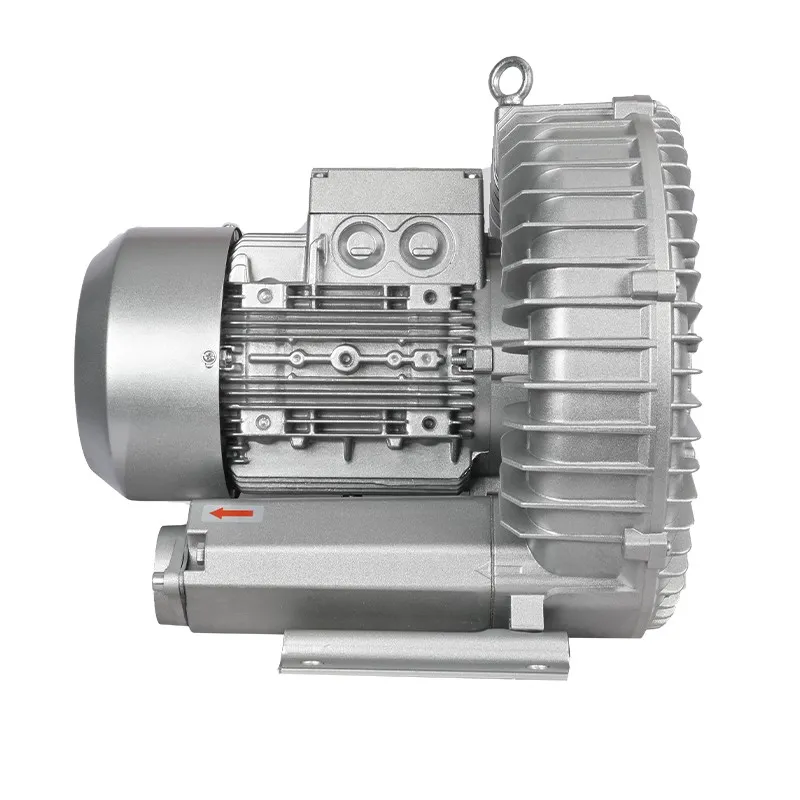
However, when it comes to high - pressure applications, the RBT double stage side channel blower becomes more efficient. In a single - stage blower, trying to achieve high pressures would require a large impeller and a high - speed motor, which would consume a significant amount of energy. In contrast, the RBT double stage side channel blower can achieve the same high pressures with a more optimized design. By compressing the air in two stages, it can use smaller impellers and lower - speed motors, resulting in lower energy consumption overall. This not only reduces operating costs but also makes it a more environmentally friendly option.
Noise Level
Noise is often a concern in industrial settings. Single - stage side channel blowers tend to produce more noise, especially when operating at high speeds to achieve higher pressures. The high - speed rotation of the impeller and the rapid compression of air can create a significant amount of noise, which can be a nuisance to workers and may even violate noise regulations in some areas.
The RBT double stage side channel blower, on the other hand, is designed to be quieter. The two - stage compression process allows for a more gradual increase in pressure, which reduces the intensity of the air compression and thus the noise generated. Additionally, the RBT double stage side channel blower often comes with advanced noise - reduction features, such as sound - absorbing materials in the housing, which further helps to minimize the noise level. This makes it a more suitable choice for applications where a quiet working environment is required, such as in laboratories or clean - room facilities.
Applications
The differences in pressure, flow rate, efficiency, and noise level between the two types of blowers also translate into different application scenarios. Single - stage side channel blowers are commonly used in applications such as:
- Ventilation Systems: For providing fresh air in small to medium - sized buildings or enclosed spaces.
- Light - Duty Pneumatic Conveying: Transporting lightweight materials over short distances.
- Aquarium Aeration: Supplying oxygen to fish tanks.
In contrast, the RBT double stage side channel blower is well - suited for more demanding applications, including:
- Vacuum Packaging: Creating a high - pressure vacuum to seal products for long - term storage.
- Industrial Drying: Removing moisture from products or materials in manufacturing processes, like the Pump Turbine Side Channel Blower.
- Printing and Coating: Providing a high - pressure air stream for drying ink or coatings on printed materials.
Durability and Maintenance
Durability and maintenance are crucial aspects to consider when investing in industrial equipment. Single - stage side channel blowers are relatively simple in design, which means they generally have fewer components that can fail. This can make them easier to maintain, and in case of a breakdown, the repair process is often less complex. However, when used in high - pressure applications, the components of a single - stage blower may be subjected to more stress, which can lead to a shorter lifespan.
The RBT double stage side channel blower, despite its more complex design, is built to be highly durable. It is constructed with high - quality materials and advanced manufacturing techniques to withstand the rigors of high - pressure operation. The two - stage design also distributes the stress more evenly across the components, reducing the wear and tear on individual parts. In terms of maintenance, while it may require more expertise due to its complexity, regular maintenance can ensure a long and trouble - free service life.
Conclusion
In conclusion, the RBT double stage side channel blower offers several distinct advantages over a single - stage side channel blower. It provides higher pressures, better efficiency in high - pressure applications, lower noise levels, and is suitable for a wider range of demanding industrial applications. As a supplier of RBT double stage side channel blowers, I am confident that our products can meet the diverse needs of our customers.
If you are in the market for a side channel blower and are facing high - pressure requirements or need a more efficient and quiet solution, I encourage you to consider our RBT double stage side channel blowers. We have a team of experts who can help you select the right blower for your specific application and provide you with comprehensive after - sales support. Feel free to contact us to discuss your requirements and start a procurement negotiation.
References
- "Industrial Blower Handbook" by Smith, John. Published by Industrial Press, 2018.
- "Side Channel Blower Technology and Applications" by Johnson, Emily. Journal of Industrial Equipment, Vol. 15, No. 3, 2020.